
2013-2025 UPSC Mains GS-1 PYQs Analysis
UPSC Mains GS-I (2013–2025) questions, segregated subject-wise and topic-wise.
1. GS-I Society (2013–2025)
- Total: 75 questions | 10 categories
- Ten major themes include urbanization, globalization, regionalism, secularism, communalism, social diversity, population, caste, tribal communities, women, and family structures.
- Significant emphasis is placed on caste identities, changing social values, gender inequalities, cultural diversity, and globalization's impact on Indian society.
- Repeated themes include social marginalization, urban poverty, traditional practices, and women's empowerment.
- Preference for analytical questions connecting societal transformations with contemporary challenges, constitutional values, economic developments, and evolving socio-cultural relationships across different sections of Indian society.
Segregated question categories
- Urbanization — 8 questions
- Globalization — 9 questions
- Regionalism — 6 questions
- Secularism & Communalism — 7 questions
- Society Features — 10 questions
- Population — 8 questions
- Caste/SC/ST — 10 questions
- Women — 9 questions
- Family — 3 questions
- Miscellaneous — 5 questions
Highest-frequency topics: Society Features and Caste/SC/ST, with 10 questions each.
2. GS-I Geography (2013–2025)
- Total: 106 questions | 8 categories
- Questions cover geomorphology, oceanography, climate change, cyclones, monsoons, environmental degradation, Himalayan ecosystems, agriculture, energy resources, and industrial locations.
- Repeated themes include resource distribution, industrial development, natural disasters, environmental sustainability, and climatic processes.
- Emphasis on conceptual understanding, geographical reasoning, regional comparisons, and the application of physical and human geography to contemporary economic, environmental, and developmental challenges.
Segregated question categories
- Geomorphology — 9 questions
- Oceanography — 7 questions
- Climatology — 20 questions
- Environmental Geography — 4 questions
- Himalayas / Western Ghats — 8 questions
- Location of Industries & Resources — 41 questions
- Human Geography (Population, Urbanization, Communication, Transport) — 12 questions
- Miscellaneous / Current Affairs — 5 questions
Highest-frequency topic: Location of Industries & Resources, with 41 questions.
Decode Civils Free-for-all Initiatives & Study Material: This is a free-for-all course and provides exam-oriented strategies, analysis and resources for UPSC CSE 2027 & 2028 Aspirants. Click Here to Enroll for Free to Access the Same.
For easy access, the free-for-all material is segregated into 3 folders:
- Prelims: Booklist, 13 Types of MCQs, CSAT High Focus Areas, Polity High Focus Areas.
- Mains: Micro Topic Breakdown, Topic wise PYQ Segregation, Solved PYQs, PDFs of Mudit Sir's Books.
- Current Affairs: May-August Prelims + Mains Notes.
Strategies and Notes can be downloaded for free from relevant folder!
Click Here to Learn More About Decode Civils' UPSC Prelims 2027 Courses
3. GS-I History (2013–2025)
- Total: 94 questions | 8 categories
- Questions examine colonial policies, nationalist movements, Gandhian leadership, social reforms, independence, political integration, and global historical transformations.
- Art, architecture, and literature are covered through ancient and medieval cultural developments, including temple traditions, sculpture, and literary contributions.
- Recurring themes emphasize historical continuity, colonial resistance, socio-political change, and nation-building.
- Preference for critical evaluation, comparative analysis, historical significance, and interconnected historical developments.
Segregated question categories
- Literature — 5 questions
- Art — 6 questions
- Architecture — 9 questions
- Ancient / Indus Valley Civilization (IVC) — 9 questions
- Medieval — 4 questions
- Freedom Struggle — 35 questions
- Post-independence — 10 questions
- World History — 16 questions
Highest-frequency topic: Freedom Struggle, with 35 questions.
Comparative overview
| Subject | Questions | Categories | Most frequent area |
|---|---|---|---|
| Society | 75 | 10 | Society Features / Caste-SC-ST |
| Geography | 106 | 8 | Industries & Resources |
| History | 94 | 8 | Freedom Struggle |
| Total | 275 | 26 |
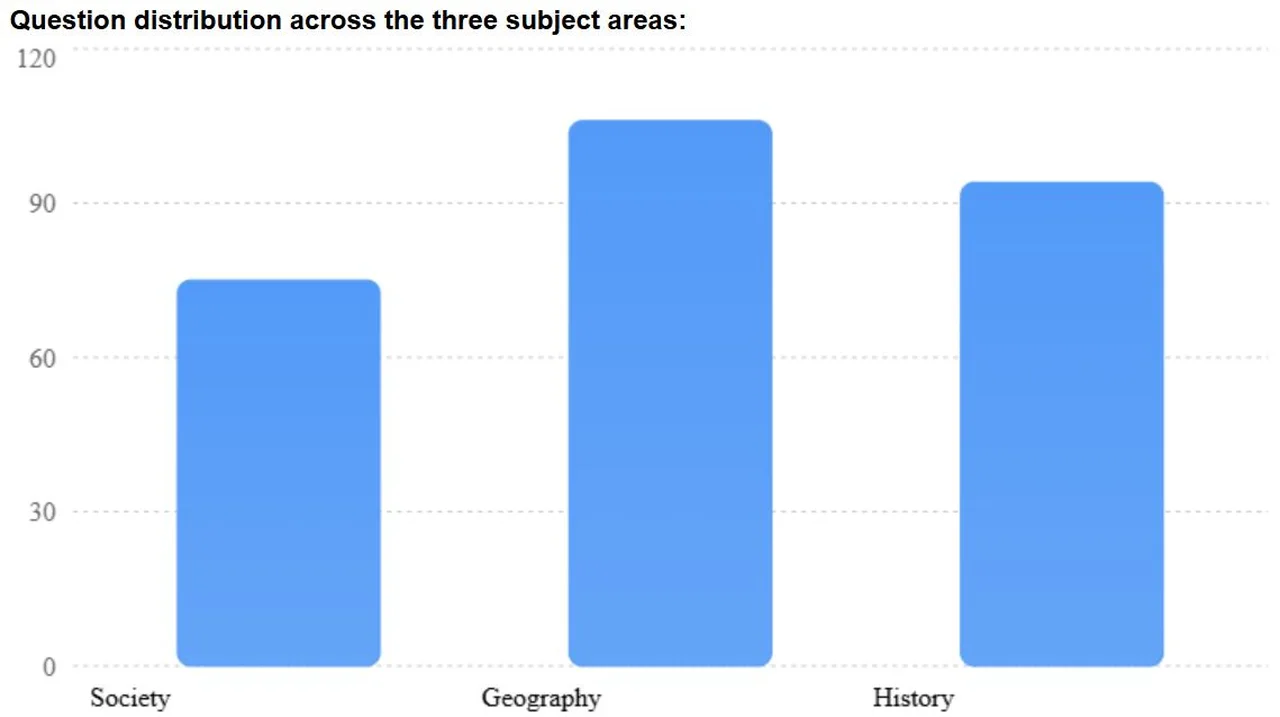
Question distribution across the three subject areas:
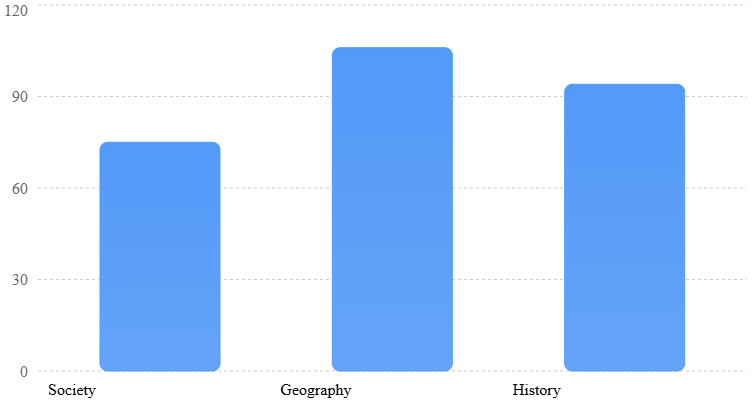
Overall observation: The question distribution indicates that Geography has the highest representation, while Freedom Struggle, Location of Industries & Resources, and major issues in Indian Society are particularly prominent within their respective subjects.
Downloads
Most read on Mudit Jain Blogs
- Booklist & Sources for UPSC Prelims 2027 Prelims
- 2026 UPSC CSE Prelims GS Detailed Analysis Analysis
- UPSC Prelims - Types of Questions Asked 2013 Onwards Analysis
- 2013-2025 UPSC Mains GS-2 PYQs Analysis Analysis
- K.N.Chandana Jahnavi (CSE-23 AIR-50) Comprehensive and Sociology Strategy Topper Strategies
- Prajnanandan Giri (CSE-23 AIR-24) Journey, Geography & Comprehensive Strategy Topper Strategies
- Aditi Varshney (AIR-57 CSE-22) Comprehensive Strategy Topper Strategies
- Jatin Jain (AIR-91 CSE-22) Sociology + Comprehensive Strategy Topper Strategies
- Diagrams for CSE Mains Mains
- UPSC Prelims 2013-2025 Mapping Questions Analysis
Preparing for UPSC?
Talk to us about the right programme for your attempt.
Keep reading
Related articles
 16
Nov 2026
 23
May 2026
Analysis · Mains
UPSC CSE-24 Marksheets Analysis - Optionals
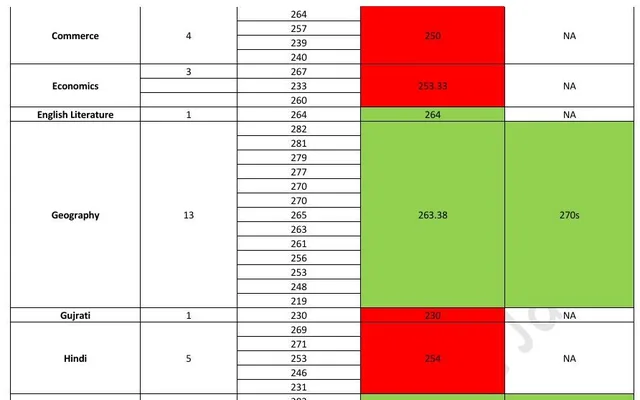
I have collected 160 Marksheets of Selected Candidates of UPSC CSE-24. I have already posted analysis of Essay and GS Marks with their comparison with CSE-23. Here is the Optional Marks Analysis of 160 selected candidates of CSE-24. Ranks are masked to maintain privacy.…
Decode Civils · 23 May 2026
 23
May 2026
Analysis · Mains
UPSC CSE-24 Marksheets Analysis - GS
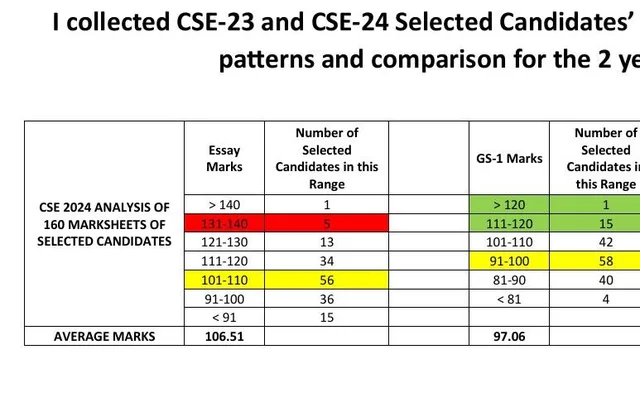
I collected CSE-23 and CSE-24 Selected Candidates’ Marksheets and based on the same, following is my analysis of scoring patterns and comparison for the 2 years: Highlights: Essay scores have gone down in CSE-24 in comparison to CSE-23. Also, scoring in higher bracket of 131-140…
Decode Civils · 23 May 2026
Our programmes
Courses for your attempt

History Module For Prelims 2027
The toughest part of Prelims, simplified by someone who has cleared Prelims 7 out of 7 times.
History Starts 20 Dec 2026
₹2,359 ₹2,949
Learn More: History Module For Prelims 2027
Current Affairs For Prelims 2027 (Plus)
The only current affairs course with direct hits in UPSC Prelims
CA Plus Starts 4 Jan 2027
₹4,129 ₹4,719
Learn More: Current Affairs For Prelims 2027 (Plus)
Current Affairs For Prelims 2027 (Base)
The only current affairs course with direct hits in UPSC Prelims
CA Base Starts 4 Jan 2027
₹3,539 ₹4,129
Learn More: Current Affairs For Prelims 2027 (Base)
PYQ Edge
A PYQ mastery program: use PYQs to build an edge in your Prelims score
PYQ Edge Starts 15 Dec 2026
₹2,359 ₹2,949
Learn More: PYQ Edge
Prelims Excellence Program 2027 (Pro)
Your One Stop Solution For Prelims 2027
PEP Pro Starts 20 Nov 2026
₹20,059 ₹22,419
Learn More: Prelims Excellence Program 2027 (Pro)
Prelims Excellence Program 2027 (Plus)
Your One Stop Solution For Prelims 2027
PEP Plus Starts 20 Nov 2026
₹11,799 10618.82
Learn More: Prelims Excellence Program 2027 (Plus)
Prelims Excellence Program 2027 (Base)
Your One Stop Solution For Prelims 2027
PEP Base Starts 20 Nov 2026
₹7,079 ₹8,259
Learn More: Prelims Excellence Program 2027 (Base)
CSAT Enrichment Batch
Master the art and science of solving CSAT
₹2,359 ₹2,949
Learn More: CSAT Enrichment Batch
CSAT WEEKEND BATCH
Master CSAT for UPSC Prelims 2027 with expert guidance, focused practice, and mock tests.
CSAT WEEKEND BATCH Starts 31 Oct 2026
₹5,899 ₹8,259
Learn More: CSAT WEEKEND BATCH
ANTHROPOLOGY THROUGH PYQ's
Understand what UPSC asks and how to answer it from the Anthro Topper.
₹5,899 ₹8,259
Learn More: ANTHROPOLOGY THROUGH PYQ's
PSIR EXCELLENCE PROGRAM PRO (OFFLINE): Batch-2
An Enrichment Course that can help you add 50+ marks in your PSIR Scores.

PSIR EXCELLENCE PROGRAM PRO (ONLINE): Batch-2
An Enrichment Course that can help you add 50+ marks in your PSIR Scores.


0 comments
Discussion
No comments yet. Be the first.