Should you start preparing for Prelims now, or continue with Mains?
DDecode Civils
· 5 min read
UPSC Prelims 2027: When and How Should You Switch from Mains to Prelims Preparation?
UPSC Civil Services Prelims 2027 is scheduled for 23rd May 2027. With approximately six months remaining, aspirants face an important dilemma:
Should you start preparing for Prelims now, or continue with Mains preparation until December and switch to Prelims in January?
During my UPSC preparation, I generally dedicated around five months exclusively to Prelims. This strategy worked for me across multiple attempts.
However, the examination has evolved significantly. What worked a few years ago may not necessarily work in 2027.
My advice is simple: Your Prelims preparation should depend on your preparation level, not merely your attempt number.
1. Why Has Prelims Preparation Become More Challenging?
The UPSC Prelims papers of 2023 and 2026 demonstrated the increasingly unpredictable nature of the examination.
The 2026 paper featured unconventional questions, factual details, unfamiliar topics and unusual option framing.
The 2023 paper also challenged candidates through analytical questions, unconventional framing and the need for careful elimination.
In several questions, knowing the subject was not enough. Candidates needed to distinguish between closely worded options under considerable time pressure.
CSAT has also become an important challenge because of lengthy calculations, reasoning-intensive questions and comprehension.
At times, GS seems to demand CSAT-like reasoning, while CSAT demands GS-like analytical comprehension!
Therefore, the conventional five-month strategy cannot be applied uniformly to every aspirant.
2. First Attempt Aspirants: How Strong Is Your Foundation?
Case A: Your Foundation Is Strong
If you have completed NCERTs, standard books and basic subjects, prepared your notes and analysed previous years' questions, you may continue Mains preparation until December.
However, dedicate 1–2 hours daily to Prelims revision, PYQs and CSAT.
Case B: Your Foundation Is Incomplete
If you have not completed NCERTs, are studying major subjects for the first time, or started preparation late, waiting until January could be risky.
You should begin Prelims-oriented preparation immediately.
Your priorities should include conceptual clarity, limited standard sources, PYQs and systematic revision.
Also, merely clearing prelims would serve no purpose either. Prepare Mains subjects that are not common with Prelims before the year ends or else you will read them for the 1st time only after prelims 2027.
The weaker your foundation, the earlier your transition should begin.
3. Second Attempt Aspirants: Diagnose Your Previous Failure
Your second attempt strategy should depend on why you could not clear Prelims previously.
Insufficient GS knowledge: Begin Prelims preparation immediately alomg with Mains subjects that are not common with Prelims.
Poor elimination or accuracy: Prioritise PYQs, sectional tests and error analysis.
Weak CSAT: Start regular CSAT practice now.
Prelims cleared comfortably: Continue Mains preparation until December, while maintaining Prelims revision.
The biggest mistake in the second attempt is repeating the previous year's strategy without identifying what went wrong.
4. Third and Fourth Attempt Aspirants: Experience Is Not Enough
Experienced aspirants often believe that having studied the syllabus multiple times gives them an advantage.
However, familiarity with a subject does not necessarily translate into examination performance.
Case A: Strong Prelims, Weak Mains
If you consistently clear Prelims but struggle with Mains marks, continue focusing on answer writing, Optional, Ethics and Mains-specific enrichment until December.
A complete transition in January may be appropriate.
Case B: Strong Mains, Weak Prelims
If your Mains preparation is satisfactory but Prelims repeatedly becomes an obstacle, start Prelims preparation immediately along with consolidation of existing Mains notes.
Case C: Weaknesses in Both
Consider allocating approximately 50% of your preparation time to Prelims and 50% to Mains during November–December.
Aspirants appearing for their fourth, fifth or subsequent attempts often assume they already know the syllabus.
But UPSC does not evaluate how many times you have read Laxmikanth. It evaluates how effectively you can answer questions within two hours.
Veterans should honestly assess three things:
Did you clear previous Prelims examinations with a comfortable GS margin?
Was your CSAT performance consistently above the qualifying threshold?
Can you handle unfamiliar questions through logical elimination?
If the answer to any of these is no, consider beginning focused Prelims preparation now.
If all three areas are strong, continuing Mains until December may be reasonable.
6. How Should You Transition from Mains to Prelims?
I recommend a two-stage transition rather than an abrupt switch.
Stage 1: November–December | Gradual Transition
Continue Mains according to your preparation level, but introduce Prelims PYQs, static revision and CSAT practice.
Candidates with weaker foundations should devote substantially more time to Prelims.
Stage 2: January–February | Complete Transition
Prelims becomes your primary focus.
Concentrate on GS, Current Affairs, PYQs, sectional tests, CSAT and systematic revision. Avoid spending significant time on new Mains-specific material.
Remember, Prelims is not merely a test of knowledge. It is also a test of judgment, accuracy and time management.
7. Why Starting Early Can Make a Difference
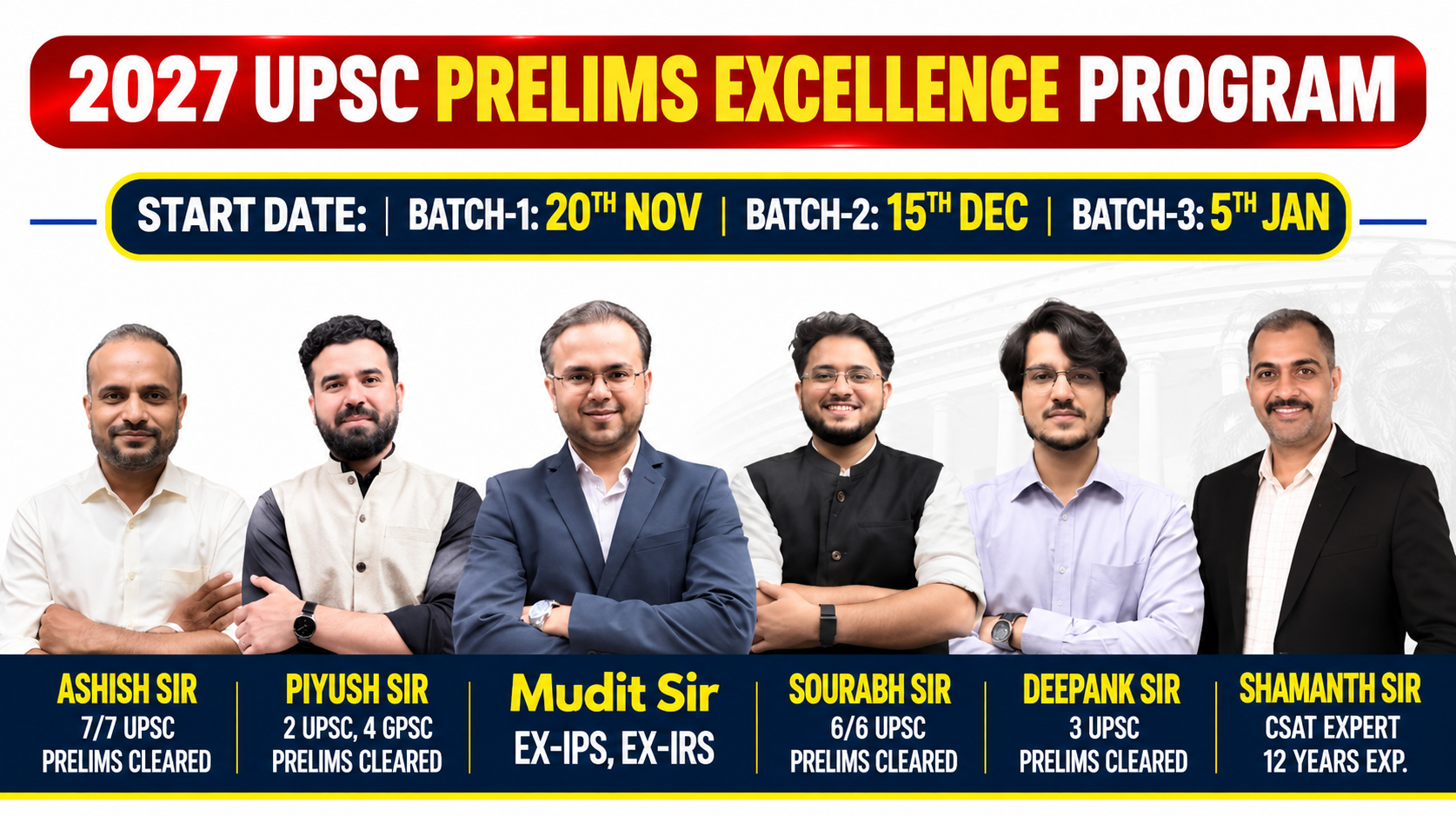
Considering the changing nature of Prelims and the different preparation requirements of aspirants, we have already started our UPSC Prelims 2027 preparation at Decode Civils from 20 November 2026.
The idea is not that every aspirant must abandon Mains preparation immediately.
Rather, aspirants should have sufficient time to develop conceptual clarity, practise PYQs, improve elimination skills and complete multiple revisions without last-minute pressure.
Those with strong foundations can continue Mains for a little longer. Those with incomplete preparation would benefit from starting earlier.
Ultimately, structured preparation should complement your individual strategy rather than replace it.
Final Advice: Don't Follow Someone Else's Calendar
There is no universally correct date to switch from Mains to Prelims.
For some aspirants, January is appropriate. For others, December is better. And for those with weak foundations or repeated Prelims failures, November itself may be the right time.
Your transition date should be determined by your preparation, not by the calendar or what other aspirants are doing.
One principle has remained constant throughout my UPSC journey:
Mains determines your rank, but Prelims determines whether you even get the opportunity to secure that rank.
Prepare for both intelligently, but never underestimate the first hurdle.
This post details the sources followed by 277 Aspirants who have cleared 2026 UPSC Prelims. This means that this is the latest source list that has worked for aspirants who attended 2026 UPSC Prelims.
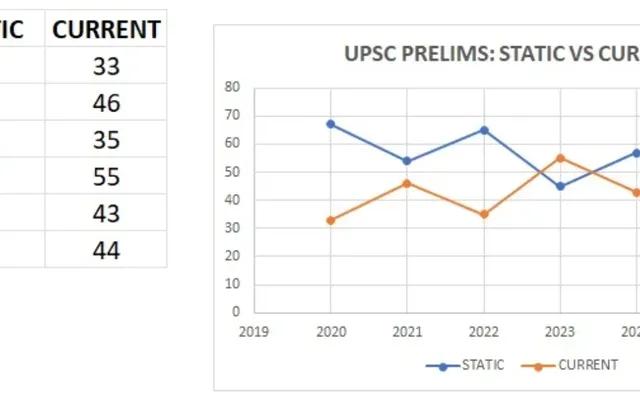
I have analyzed last 6 years of UPSC Prelims papers to arrive at predictions for UPSC Prelims 2026. The conclusion of my analysis is that this years’ prelims will be more on static lines than current as there is a clear alternate-year trend. Further, I have analyzed subject-wise…


 22
Nov 2026
 15
Nov 2026
 19
Feb 2026






0 comments
Discussion
No comments yet. Be the first.