
UPSC Mains GS-1 2013-2025 PYQs Analysis
UPSC Mains GS-I (2013–2025) questions, segregated subject-wise and topic-wise.
1. GS-I Society (2013–2025)
- Total: 75 questions | 10 categories
- Ten major themes include urbanization, globalization, regionalism, secularism, communalism, social diversity, population, caste, tribal communities, women, and family structures.
- Significant emphasis is placed on caste identities, changing social values, gender inequalities, cultural diversity, and globalization's impact on Indian society.
- Repeated themes include social marginalization, urban poverty, traditional practices, and women's empowerment.
- Preference for analytical questions connecting societal transformations with contemporary challenges, constitutional values, economic developments, and evolving socio-cultural relationships across different sections of Indian society.
Segregated question categories
- Urbanization — 8 questions
- Globalization — 9 questions
- Regionalism — 6 questions
- Secularism & Communalism — 7 questions
- Society Features — 10 questions
- Population — 8 questions
- Caste/SC/ST — 10 questions
- Women — 9 questions
- Family — 3 questions
- Miscellaneous — 5 questions
Highest-frequency topics: Society Features and Caste/SC/ST, with 10 questions each.
2. GS-I Geography (2013–2025)
- Total: 106 questions | 8 categories
- Questions cover geomorphology, oceanography, climate change, cyclones, monsoons, environmental degradation, Himalayan ecosystems, agriculture, energy resources, and industrial locations.
- Repeated themes include resource distribution, industrial development, natural disasters, environmental sustainability, and climatic processes.
- Emphasis on conceptual understanding, geographical reasoning, regional comparisons, and the application of physical and human geography to contemporary economic, environmental, and developmental challenges.
Segregated question categories
- Geomorphology — 9 questions
- Oceanography — 7 questions
- Climatology — 20 questions
- Environmental Geography — 4 questions
- Himalayas / Western Ghats — 8 questions
- Location of Industries & Resources — 41 questions
- Human Geography (Population, Urbanization, Communication, Transport) — 12 questions
- Miscellaneous / Current Affairs — 5 questions
Highest-frequency topic: Location of Industries & Resources, with 41 questions.
3. GS-I History (2013–2025)
- Total: 94 questions | 8 categories
- Questions examine colonial policies, nationalist movements, Gandhian leadership, social reforms, independence, political integration, and global historical transformations.
- Art, architecture, and literature are covered through ancient and medieval cultural developments, including temple traditions, sculpture, and literary contributions.
- Recurring themes emphasize historical continuity, colonial resistance, socio-political change, and nation-building.
- Preference for critical evaluation, comparative analysis, historical significance, and interconnected historical developments.
Segregated question categories
- Literature — 5 questions
- Art — 6 questions
- Architecture — 9 questions
- Ancient / Indus Valley Civilization (IVC) — 9 questions
- Medieval — 4 questions
- Freedom Struggle — 35 questions
- Post-independence — 10 questions
- World History — 16 questions
Highest-frequency topic: Freedom Struggle, with 35 questions.
Comparative overview
| Subject | Questions | Categories | Most frequent area |
|---|---|---|---|
| Society | 75 | 10 | Society Features / Caste-SC-ST |
| Geography | 106 | 8 | Industries & Resources |
| History | 94 | 8 | Freedom Struggle |
| Total | 275 | 26 |
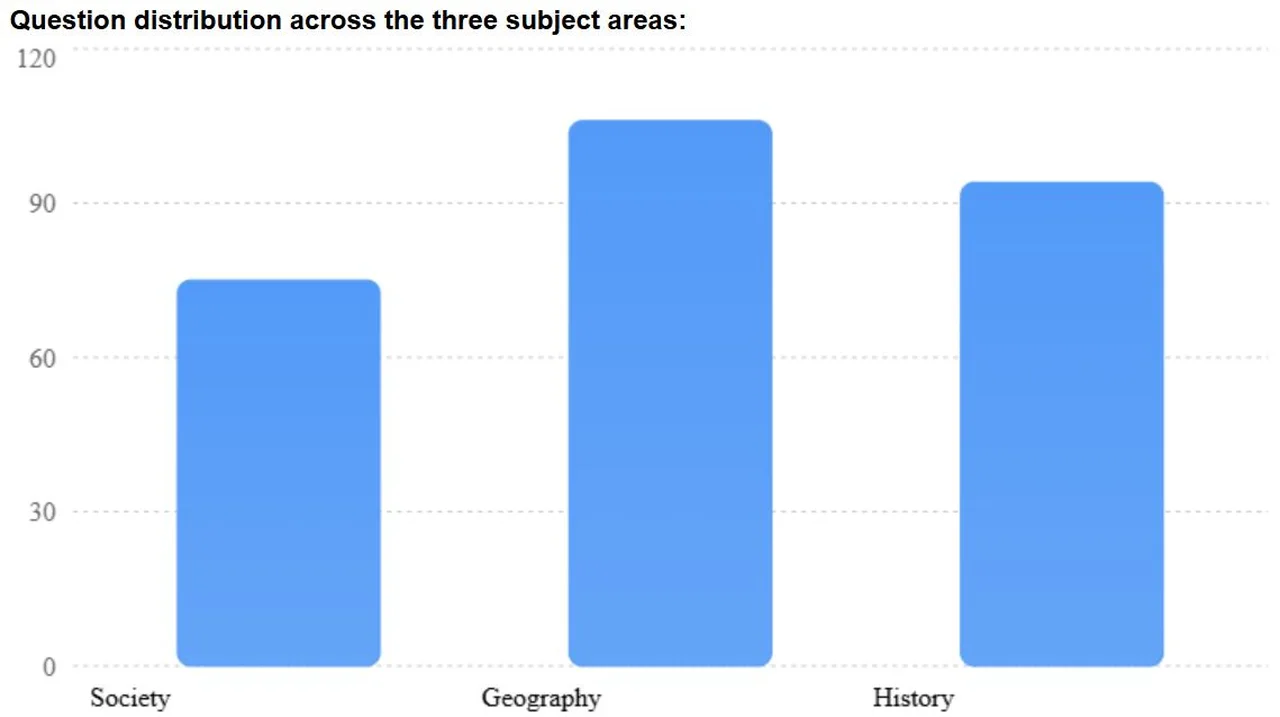
Question distribution across the three subject areas:
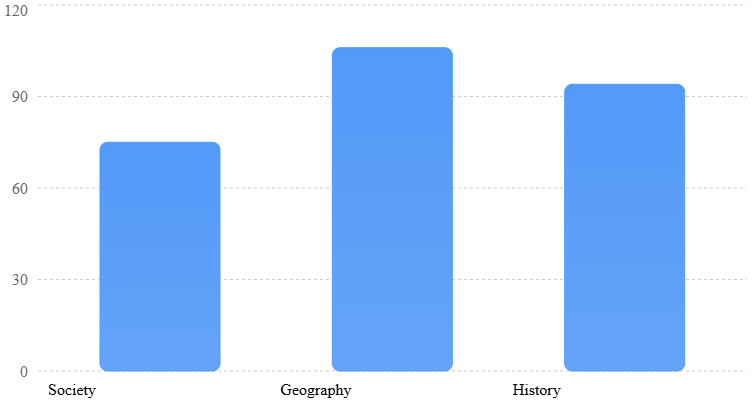
Overall observation: The question distribution indicates that Geography has the highest representation, while Freedom Struggle, Location of Industries & Resources, and major issues in Indian Society are particularly prominent within their respective subjects.
Downloads
Preparing for UPSC?
Talk to us about the right programme for your attempt.
Keep reading
Related articles
 23
May 2026
Analysis · Mains
UPSC CSE-24 Marksheets Analysis - Optionals
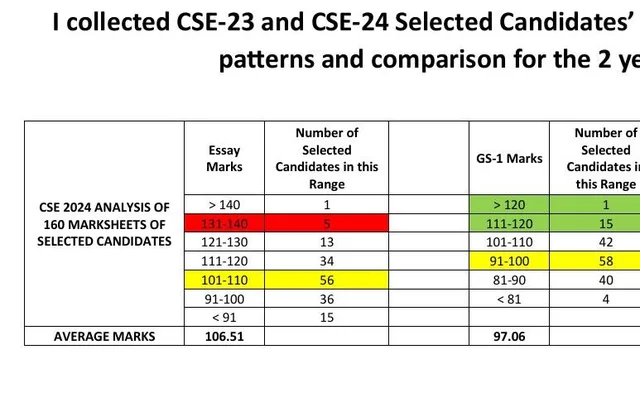
I have collected 160 Marksheets of Selected Candidates of UPSC CSE-24. I have already posted analysis of Essay and GS Marks with their comparison with CSE-23. Here is the Optional Marks Analysis of 160 selected candidates of CSE-24. Ranks are masked to maintain privacy.…
Decode Civils · 23 May 2026
 23
May 2026
Analysis · Mains
UPSC CSE-24 Marksheets Analysis - GS
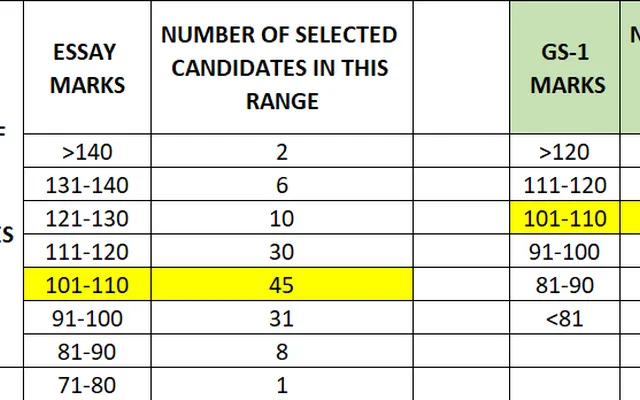
I collected CSE-23 and CSE-24 Selected Candidates’ Marksheets and based on the same, following is my analysis of scoring patterns and comparison for the 2 years: Highlights: Essay scores have gone down in CSE-24 in comparison to CSE-23. Also, scoring in higher bracket of 131-140…
Decode Civils · 23 May 2026
 28
Mar 2026
Analysis · Mains
UPSC CSE-25 Marksheets Analysis
I collected CSE-24 and CSE-25 Selected Candidates’ Marksheets and based on the same, following is my analysis of scoring patterns and comparison for the 2 years: Highlights: Essay scores have gone up marginally in CSE-25 in comparison to CSE-24. Most of the selected candidates…
Decode Civils · 28 Mar 2026
Our programmes
Courses for your attempt

Current Affairs For Prelims 2027 (Plus)
The only current affairs course with direct hits in UPSC Prelims
₹4,129 ₹4,719
Learn More: Current Affairs For Prelims 2027 (Plus)
Current Affairs For Prelims 2027 (Base)
The only current affairs course with direct hits in UPSC Prelims
₹3,539 ₹4,129
Learn More: Current Affairs For Prelims 2027 (Base)
Prelims Excellence Program 2027 (Base)
Your One Stop Solution For Prelims 2027
₹7,079 ₹8,259
Learn More: Prelims Excellence Program 2027 (Base)
CSAT WEEKEND BATCH
Master CSAT for UPSC Prelims 2027 with expert guidance, focused practice, and mock tests.
CSAT WEEKEND BATCH Starts 31 Oct 2026
₹5,899 ₹8,259
Learn More: CSAT WEEKEND BATCH
Prelims Excellence Program 2027 (Plus)
Your One Stop Solution For Prelims 2027
₹11,799 10618.82
Learn More: Prelims Excellence Program 2027 (Plus)
Prelims Excellence Program 2027 (Pro)
Your One Stop Solution For Prelims 2027
₹20,059 ₹22,419
Learn More: Prelims Excellence Program 2027 (Pro)
History Module For Prelims 2027
The toughest part of Prelims, simplified by someone who has cleared Prelims 7 out of 7 times.
₹2,359 ₹2,949
Learn More: History Module For Prelims 2027
CSAT Enrichment Batch
Master the art and science of solving CSAT
₹2,359 ₹2,949
Learn More: CSAT Enrichment Batch
PYQ Edge
A PYQ mastery program: use PYQs to build an edge in your Prelims score
₹2,359 ₹2,949
Learn More: PYQ Edge
ANTHROPOLOGY THROUGH PYQ's
Understand what UPSC asks and how to answer it from the Anthro Topper.
₹5,899 ₹8,259
Learn More: ANTHROPOLOGY THROUGH PYQ's
PSIR EXCELLENCE PROGRAM PRO (OFFLINE): Batch-2
An Enrichment Course that can help you add 50+ marks in your PSIR Scores.

PSIR EXCELLENCE PROGRAM PRO (ONLINE): Batch-2
An Enrichment Course that can help you add 50+ marks in your PSIR Scores.


0 comments
Discussion
No comments yet. Be the first.