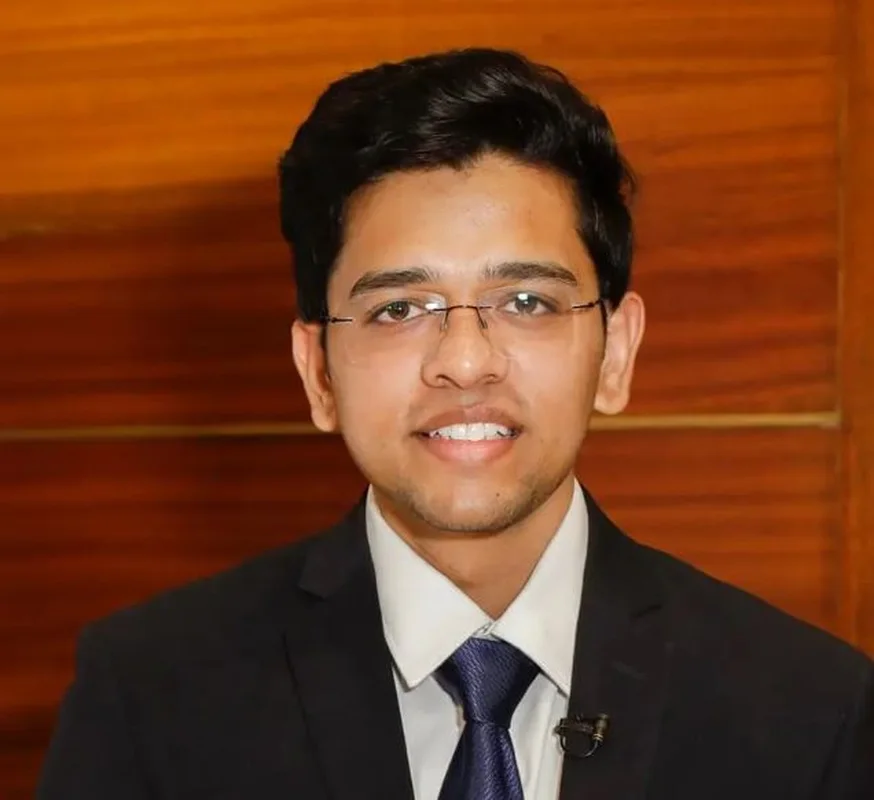
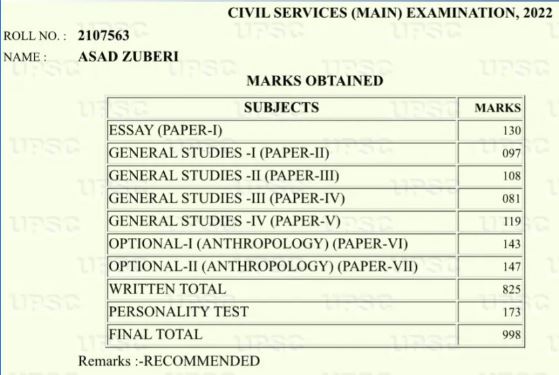
Asad Zuberi cracked CSE-22 with AIR-86 and Anthropology Optional wherein he scored 290 Marks. Following is his detailed strategy in his own words.
DDecode Civils
· 8 min read
Hi All,
Asad Zuberi cracked CSE-22 with AIR-86 and Anthropology Optional wherein he scored 290 Marks. Following is his detailed strategy in his own words.
My discussion is based on following aspects of subject:
Resources used by me to prepare this subject.
How to start reading and how to make notes for Anthropology.
Covering the basics.
Value Addition Material : How to add value to your answers. How to report it in your answers. I will enlist some amazing sources for this, and will also upload my scanned notes for this section.
Answer writing in different sections of Paper 1 and Paper 2. This is important as delivering your content in the most relevant way will fetch you marks.
Relevance of Test series, how to evaluate your performance and how to enrich your notes further in this process. (I will upload my test papers too)
Attempting the paper in real time, time management and completing the paper.
An advice on resources:
Please don’t blindly depend on one stop solutions for Anthropology. Such books and compilations in Question and Answer format lack conceptual clarity and one cannot mug up things without understanding them. I used these books sparingly for value addition or revision only. UPSC wants you to read the subject and it is asking very descriptive and often complex questions in exams which can be answered only after reading the text of this subject. Please read Anthropology by Carol R Ember and Melvin R Ember cover to cover, it's an amazing book to start reading this subject and develop interest in it.
Resources used to prepare basics of Paper-1
(Please refer to Topics in UPSC Syllabus)
Topic 1.1, 1.2, 1.3, 8: BrainTree Material, Anthropology Simplified by Dr Vivek Bhasme
(Please refer to the topics given in UPSC Syllabus)
Topic 1.1, 1.2, 1.3 : Prehistoric Archaeology by DK Bhattacharya, IGNOU notes, Anthropology Demystified by Akshat Jain
Topic 2, 3.1, 3.2, 3.3, 5.1, 5.2, 5.3 : Indian Anthropology by Nadeem Hasnain, ePG Pathshala Modules, Anthropology Demystified by Akshat Jain, IGNOU notes
Topic 4 : History of Anthropological Thought by Gaya and Upadhyay
Topic 6.1 to 9.3 (Tribal Anthropology) : Tribal India by Nadeem Hasnain, V Xaxa Report 2014 cover to cover reading, Ministry of Tribal Affairs Website
Note: To add to this content in both Paper 1 and Paper 2 I have extensively used Test series discussion Class notes and handouts. They were my one stop solution to reading comprehensively about works of Indian Anthropologists and also for collecting Diverse Case Studies.
How to start reading and how to make notes for both Paper 1 and Paper 2
Start reading a book that gives you a holistic, general view of this subject. I would recommend Anthropology by Ember and Ember. This will form a base and help you figure out things you will read in this journey.
I prepared Paper 1 first and then went to study Paper 2. I read introductory chapters like Chapter 1, 8 first and then went to read Socio Cultural Part (Chapter 2 onwards in Paper 1). I then read Theories (Chapter 6). However a lot of people prefer reading Chapter 6 first as it makes it easier to read Socio Cultural Anthropology. Make your choice.
Do not make notes on the first reading, you will end up writing the same text in your notes. Read it once, then go through PYQ. This will give you an idea of what themes are relevant to UPSC and how they frame questions.
Divide Anthropology syllabus in slots and sections as I have done it for you in strategy messages 1/n and 2/n. These sections are similar to each other and make your preparation easier. Get done with reading, analyse PYQ topic wise, make crisp notes and repeat. Keep revising your notes.
Keep your notes very organic, you will have to add content to them in many iterations so always leave space for adding content on them. I will upload some pictures and references of my notes soon.
Lastly, be patient. Respect your optional and fall in love with it. No subject is big or small, you have to put in effort and interest in every subject to score well in it.
Optional takes you to your desired rank and service, keep it close to your heart.
Covering the basics
This part is just to make you realize the importance of reading the basics well. A lot of students start running behind value addition material for a topic even before covering the basics thoroughly.
Please read the basic books or notes or sources well before you jump on covering the value addition material. Read and revise as much as you can and then start attempting the PYQ, followed by test series. Check if you are able to reproduce the content you have read.
For example : In a question asked on Sanskritisation and Westernisation, if you have not Quoted MN Srinivas, basic definition of these, the relevant factors, etc. adding a value addition example will not fetch you marks.
The examiners want to read the basics in a flow. Adding too much value addition content will break the flow of your answer and may not be rewarded. Adding no value addition content may end up in average marks. The key is to strike the right balance.
Value Addition
Why to do value addition?
The role of value addition becomes relevant after your basics are covered well. A good answer will contain some basic description and explanations to meet the demand of the question. But to make your answer better, adding a relevant content for value addition may fetch you some extra marks.
What is value addition material?
Examples from Current Affairs, Relevant Case Studies by prominent Anthropologists, Recent Fossil Finds (eg Dragon Man, etc), A good data point in Graphical/ visual form, Some content inter relating concepts across chapters etc.
Sources for Value Addition
I have used a lot of sources to add value to my answers. I am listing some of them here:
For Paper 1:
Research Gate articles, Reddit: r/anthropology, Britannica Articles, Wikipedia, Google Scholar search (JSTOR, etc)
For Paper 2:
V Xaxa Report 2014, ePG Pathshala Content, Economic and Political Weekly articles, Committee Sunmary like Bhuria Commission, Shilu Ao Committee, BK Roy Burman Committee, Kharge Committee on TSP, Ministry of Tribal Affairs Website, Indian Tribal Heritage.org
How to write it in your answers?
This is my personal view that reporting this content with a heading of “Value Addition”, “Case Study” etc breaks the flow of your answer. I try to put this content as “For example” or “A study by…… in …..” etc. I feel like if you are presenting your answer in front of Anthropologists who are checking your answer sheets, respect that they know more than you and try not to be loud about content that you are putting.
Answer writing in different sections
This is one of the most critical parts of any optional subject. If you have read the text well but you don’t know how to present it in the form of an answer, you will not get marks.
Some general tips for Anthropology answer writing:
Always meet the demand of question, UPSC is asking very descriptive and analytical questions now. Just writing about the key words of question will not fetch you marks.
Never skip basic theory and content for the sake of writing value addition. Examiner wants to read content of this subject and you need to report basic theory first.
Avoid making Vague diagrams. This will occupy Unnecessary space in your answer sheet and you may not be able to write relevant text. It will also give an impression to the examiner that you don’t know much about the question.
Make relevant neat diagrams and mark details in them. Specifically for Evolution, Archaeology and Genetics, diagrams are important.
Maintain quality uniformly throughout the answer. Try writing your answers in a flow.
Avoid overloading value addition content as it breaks the flow of answer.
Attempting the paper in Real Time
Completing the paper is extremely important and you need a plan and a great execution of this plan to be able to do that. Following strategy has worked really well for me for both Anthropology and GS:
1. Divide 250 marks into 5 parts of 50 marks each. In Anthropology, this can be 5 different questions.
2. Divide 180 minutes into 5 parts of 35 minutes each and keep 5 minutes extra to sign the attendance sheet, and for compensation, etc.
3. If you have started attempting the paper at 9 am. Take a note of your progress at intervals of 35 minutes, for eg 9:35 am, 10:10 am, and so on.
4. If you are lagging behind, catch up then and there. This will ensure a uniform answer quality throughout your paper.
Lastly, practice this in Tests and then replicate in your exam. This one strategy has helped me complete all the papers in required amount of time.
Dwij Goel cracked CSE-22 with AIR-71. Following is his strategy for Anthropology Optional wherein he scored a grand 315 Marks. How I scored 315 marks in Anthropology My name is Dwij Goel. I have secured AIR 71 in UPSC civil services examination 2022. My optional was anthropology…



 23
May 2026
 20
Nov 2026
 20
Nov 2026











0 comments
Discussion
No comments yet. Be the first.