
Hormuz Crisis and Energy Security
The Hindu, Page 6, Editorial - The case for building India’s coal chemistry capability - GS-3-Economy Why in News: The Strait of Hormuz crisis highlighted India's energy security challenges and renewed focus on coal…

The Hindu, Page 6, Editorial - The case for building India’s coal chemistry capability - GS-3-Economy
Why in News: The Strait of Hormuz crisis highlighted India's energy security challenges and renewed focus on coal gasification and Dimethyl Ether (DME) as alternatives to LPG imports.
India's Response to the Strait of Hormuz Crisis
- India managed the energy shock through diplomacy, diversification, and fiscal measures.
- Indian refineries demonstrated exceptional technical flexibility in adapting to crude supply disruptions.
- Indigenous scientific capability and technological self-reliance emerged as key strengths.
- The crisis reaffirmed the importance of research and development, process innovation, and workforce training.
- India has not yet reduced its underlying dependence on imported energy.
Refinery Flexibility
- India's supplier base for crude has nearly tripled over the past two decades.
- Indian refineries developed the capability to process crude with different density, sulphur content, and viscosity.
- During the Strait of Hormuz disruption, refineries processed crude from the Americas, Atlantic Basin, West Africa, Russia, and West Asia.
- Non-Hormuz sourcing increased from 55% to 70% of India's crude intake within weeks.
- This capability was built through sustained investment in indigenous R&D, metallurgical advances, and process engineering.
LPG Supply Management
- India's LPG import infrastructure had roughly doubled over the preceding decade.
- Under the LPG Control Order, refineries were directed to maximise LPG yields. Domestic LPG production increased from 35 Thousand Metric Tonnes (TMT) per day to 54 TMT per day within five days. Engineers achieved this by adjusting fractionation and cracking units.
- The response combined technical capability with disciplined demand management.
Coal Gasification and DME
- Dimethyl Ether (DME) is a clean-burning gas that can be blended with LPG.
- DME can be produced through coal gasification.
- India possesses some of the world's largest coal reserves.
- The Bureau of Indian Standards (BIS) has approved blending up to 20% DME with LPG. A 20% DME blend could displace about 6.3 million tonnes of LPG imports annually. It could save nearly ₹34,000 crore in foreign exchange every year.
Government Initiatives
- Scientists at CSIR-National Chemical Laboratory (NCL) developed an indigenous technology for converting methanol into DME.
- The Centre for High Technology approved scaling up the indigenous pilot technology.
- The Union Cabinet approved a scheme to promote surface coal and lignite gasification. The scheme targets 100 million tonnes of coal gasification annually by 2030. It provides incentives of up to 20% of plant and machinery costs. It extends coal linkage tenure to 30 years.
Challenges
- Indian coal has a higher ash content than the coal used in China's coal-to-chemicals industry.
- Domestic gasification capacity remains below the targeted level.
- Closing the gap requires industrial discipline and investment.
- The article states that the remaining challenge is execution, not policy intent.
Global Energy Security
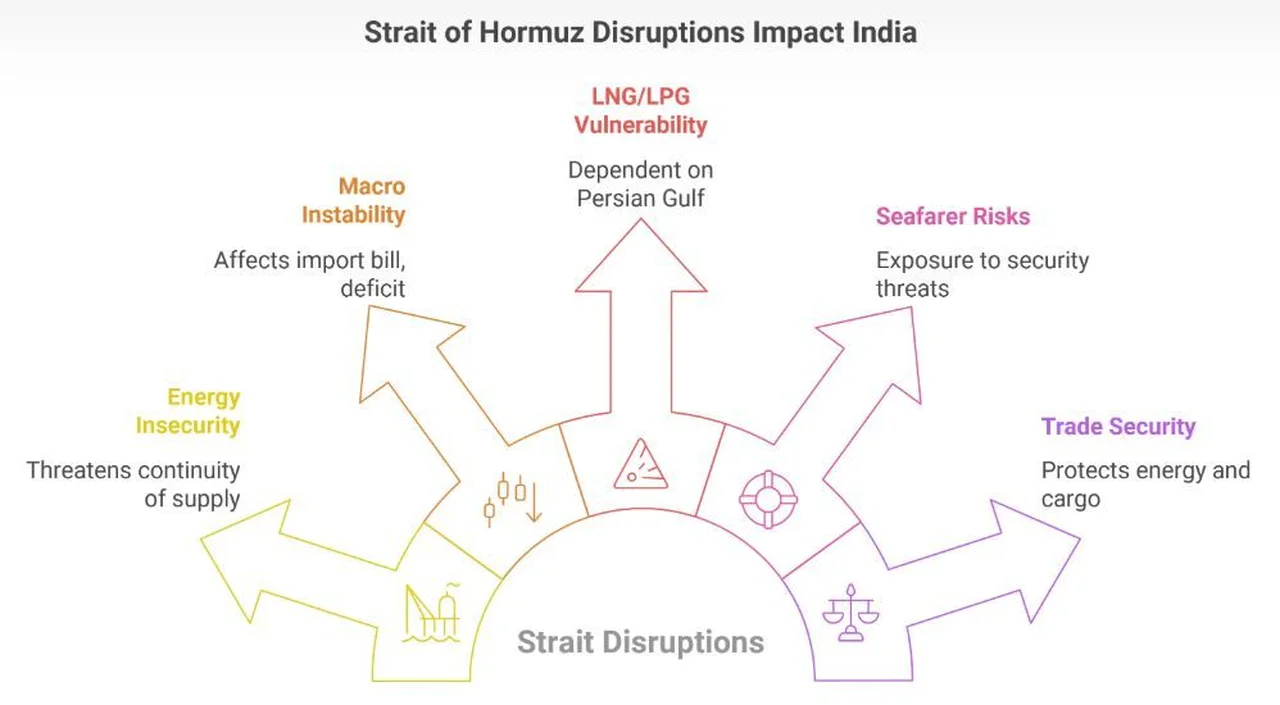
- Qatar halted LNG production after a drone strike. Qatar supplies about half of India’s LNG imports. Refineries in Saudi Arabia and Iraq suspended operations.
- Oil and gas prices surged following tensions and the closure of the Strait of Hormuz. More than 20% of global oil and gas shipments pass through it. Nearly 40% of India’s oil imports pass through the strait.
- About 30% of India’s natural gas is used for fertiliser production. About 60% of India’s LPG comes from imports upstream of the strait.
- The region accounted for 31% of global oil production (2024) and included Saudi Arabia, UAE, Iraq, Iran, and Kuwait among the top producers. West Asia accounted for 38% of global oil exports (2024).
Also, Click Here for Free Daily Current Affairs and MCQs
Preparing for UPSC?
Talk to us about the right programme for your attempt.
Keep reading
Related articles
 03
Jul 2026
03
Jul 2026
Current Affairs · Governance
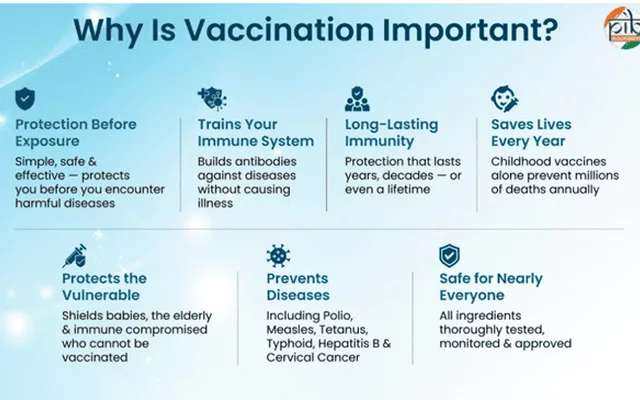
HPV Vaccination
The Hindu, Page 10, Editorial - A shot at life, Mandsaur’s model for HPV vaccination - GS-2-Health Why in news: The Government of India launched a nationwide cervical cancer campaign in February 2026, providing free HPV…
Decode Civils · 3 Jul 2026
 03
Jul 2026
03
Jul 2026
Current Affairs · Polity
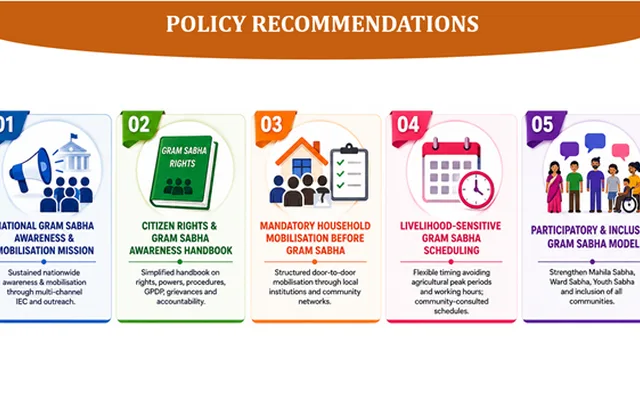
Gram Sabhas and Panchayats
The Hindu, Page 6, Editorial - Yes and no - GS-2-Polity Why in News: A Rural Development Ministry report based on surveys examines citizen participation in gram sabhas and highlights concerns over participation fatigue.…
Decode Civils · 3 Jul 2026
 26
Jun 2026
26
Jun 2026
Current Affairs · Governance
FCRA Amendment Rules 2026
Subject - GS Paper-II (Governance & Social Justice) Subtopic - NGOs, civil society, and government policies. Source - The Hindu (26th June 2026 - Page 8 - Editorial Section) Onerous rules Why in news: The Foreign…
Decode Civils · 26 Jun 2026
Our programmes
Courses for your attempt

PSIR EXCELLENCE PROGRAM PRO (OFFLINE): Batch-2
An Enrichment Course that can help you add 50+ marks in your PSIR Scores.

PSIR EXCELLENCE PROGRAM PRO (ONLINE): Batch-2
An Enrichment Course that can help you add 50+ marks in your PSIR Scores.

PSIR EXCELLENCE PROGRAM- BASE (OFFLINE): Batch-2
An Enrichment Course that can help you add 50+ marks in your PSIR Scores.
PSIR EXCELLENCE PROGRAM BASE (ONLINE): Batch-2
An Enrichment Course that can help you add 50+ marks in your PSIR Scores.

Mains Excellence Program Pro for Mains 2027 - Final Batch
Your One-Stop Solution for UPSC 2027 Mains: - MEP Faculties have an experience of 22 UPSC CSE Mains, 10 Interviews and 5 Final Selections. - Faculties include Mudit Jain Sir (AIR-222, 207, 173), Sourabh Arbole Sir (6…
Batch 2027 Starts 14 Sep 2026

Mains Excellence Program Plus for Mains 2027 - Final Batch
Your One-Stop Solution for UPSC 2027 Mains: - MEP Faculties have an experience of 22 UPSC CSE Mains, 10 Interviews and 5 Final Selections. - Faculties include Mudit Jain Sir (AIR-222, 207, 173), Sourabh Arbole Sir (6…
Batch 2027 Starts 14 Sep 2026

Mains Excellence Program Basic for Mains 2027 - Final Batch
Your One-Stop Solution for UPSC 2027 Mains: - MEP Faculties have an experience of 22 UPSC CSE Mains, 10 Interviews and 5 Final Selections. - Faculties include Mudit Jain Sir (AIR-222, 207, 173), Sourabh Arbole Sir (6…
Batch 2027 Starts 14 Sep 2026
Foundation + Advanced Ethics Base (Offline)
Is Ethics Paper Doable via Philosophical Gyan or Specific Thematic Preparation is Needed? Last 5 Years' Analysis & 54 Distinct Themes asked by UPSC answer the above question. Thematic preparation and advanced ethics…
Batch 2027 Starts 14 Sep 2026
Foundation + Advanced Ethics Base (Online)
Is Ethics Paper Doable via Philosophical Gyan or Specific Thematic Preparation is Needed? Last 5 Years' Analysis & 54 Distinct Themes asked by UPSC answer the above question. Thematic preparation and advanced ethics…
Batch 2027 Starts 14 Sep 2026
Foundation + Advanced Ethics Plus (Offline)
Is Ethics Paper Doable via Philosophical Gyan or Specific Thematic Preparation is Needed? Last 5 Years' Analysis & 54 Distinct Themes asked by UPSC answer the above question. Thematic preparation and advanced ethics…
Batch 2027 Starts 14 Sep 2026
Foundation + Advanced Ethics Plus (Online)
Is Ethics Paper Doable via Philosophical Gyan or Specific Thematic Preparation is Needed? Last 5 Years' Analysis & 54 Distinct Themes asked by UPSC answer the above question. Thematic preparation and advanced ethics…
Batch 2027 Starts 14 Sep 2026

Year Long Current Affairs Base (Pre + Mains)
Master Current Affairs the way UPSC demands—through conceptual understanding, issue-based analysis, and exam-oriented preparation. With a proven track record across UPSC and State PSC examinations, our course helps you…
Batch 2027 Starts 16 Aug 2026


0 comments
Discussion
No comments yet. Be the first.