
FCRA Amendment Rules 2026
Subject - GS Paper-II (Governance & Social Justice) Subtopic - NGOs, civil society, and government policies. Source - The Hindu (26th June 2026 - Page 8 - Editorial Section) Onerous rules Why in news: The Foreign…


Subject - GS Paper-II (Governance & Social Justice)
Subtopic - NGOs, civil society, and government policies.
Source - The Hindu (26th June 2026 - Page 8 - Editorial Section)
Onerous rules
Why in news: The Foreign Contribution (Regulation) Amendment Rules, 2026 have been notified, introducing stricter compliance requirements for NGOs registered under the Foreign Contribution (Regulation) Act (FCRA), 2010.
Key Provisions of the FCRA Amendment Rules, 2026
- NGOs registered under the FCRA, 2010 must confine their work to the activities specified for their category and to the States and Union Territories mentioned in their registration.
- NGOs must disclose their social media handles, websites, and publications.
- NGOs are barred from carrying "political content".
- The Rules impose stringent penalties for using foreign funds for unapproved purposes.
- NGOs must pay separate fees for each category of work and for each State or Union Territory where they operate, replacing the earlier single registration fee.
Concerns Regarding the New Rules
- The Rules increase compliance costs and paperwork for NGOs.
- The operation of the FCRA regime has been criticised as lacking transparency.
- More than 20,000 FCRA registrations have reportedly been revoked over the past decade on opaque grounds.
- The new Rules are viewed as creating a chilling effect by imposing greater barriers and commitments on NGOs.
- Earlier proposals allowing a government-appointed authority to take over the assets of NGOs with cancelled, surrendered, or non-renewed registrations were put on hold after protests.
Judicial Background
- In Noel Harper (2022), the Supreme Court upheld the 2020 FCRA amendments, accepting the government's arguments relating to sovereignty and national security.
- In 2020, the Supreme Court read down rules that would have classified rights activism, protests, and demonstrations as work "of a political nature".
- The Court distinguished party politics from the everyday work of social and economic betterment.
- The new Rules treat advocacy and "political content" as grounds for disqualification.
Way Forward
- The Centre should withdraw the punitive provisions, particularly those relating to multiple fees and political content.
- A fairer regulatory framework should balance transparency, national security, and the functioning of civil society organisations.
Mains Value Addition:
What is the FCRA?
- Origin: Enacted in 1976 during the Emergency to prevent foreign entities from funding organizations to meddle in India's domestic affairs.
- Current Law: The 1976 Act was repealed and replaced by the stronger FCRA, 2010, which was further tightened by amendments in 2020.
- Nodal Ministry: It is implemented by the Ministry of Home Affairs (MHA), as it is primarily an internal security legislation.
- Core Mandate: It regulates the acceptance and utilization of foreign contributions (donations) and hospitality by individuals, associations, or companies to ensure they are consistent with the values of a sovereign democratic republic.
Key Provisions & Compliance (FCRA 2010 & 2020 Amendments)
- Mandatory Registration: Any NGO, society, or charitable trust seeking foreign funding must register under the FCRA. Registration is valid for 5 years and must be renewed 6 months before expiry.
- Designated Bank Account: All foreign funds must initially be received in a single, exclusive "FCRA Account" at the State Bank of India (SBI), New Delhi Main Branch. (Other accounts can be used for utilization, but receipt must be at SBI).
- Aadhaar Mandate: It is mandatory for all office bearers, directors, or key functionaries of an NGO to provide their Aadhaar number (or passport/OCI card for foreigners) for identification.
- Ban on Transfers (Sub-granting): A major 2020 amendment completely prohibits the transfer of foreign funds from one FCRA-registered NGO to another person or organization.
- Administrative Expense Cap: The proportion of foreign funds that can be used for administrative expenses (like salaries or office maintenance) was reduced from 50% to 20%.
Prohibition on Acceptance
To insulate India's democratic institutions and public administration from foreign influence, the Act explicitly bars certain categories of people from receiving foreign contributions:
- Election candidates and members of any legislature (MPs/MLAs).
- Political parties and their office bearers.
- Judges and government servants (the 2020 amendment specifically added "public servants" as defined under the IPC).
- Publishers, editors, or cartoonists of registered news media.
| Points of Difference | FCRA 2010 | FCRA 2020 / New Rules |
| Administrative Cap | Up to 50% of funds | Capped at 20% of funds |
| Fund Transfers | Allowed to other FCRA NGOs | Prohibited entirely |
| Bank Account | Any scheduled bank | Mandatory receipt at SBI New Delhi |
| Personal Identity | Standard KYC | Aadhaar mandatory for functionaries |
Preparing for UPSC?
Talk to us about the right programme for your attempt.
Keep reading
Related articles
 03
Jul 2026
03
Jul 2026
Current Affairs · Governance
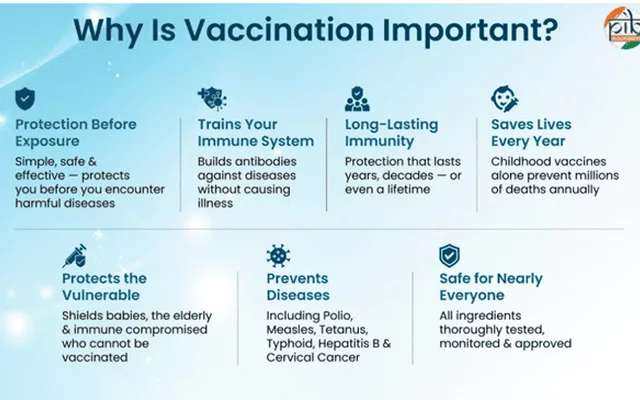
HPV Vaccination
The Hindu, Page 10, Editorial - A shot at life, Mandsaur’s model for HPV vaccination - GS-2-Health Why in news: The Government of India launched a nationwide cervical cancer campaign in February 2026, providing free HPV…
Decode Civils · 3 Jul 2026
 03
May 2026
03
May 2026
Current Affairs · Governance
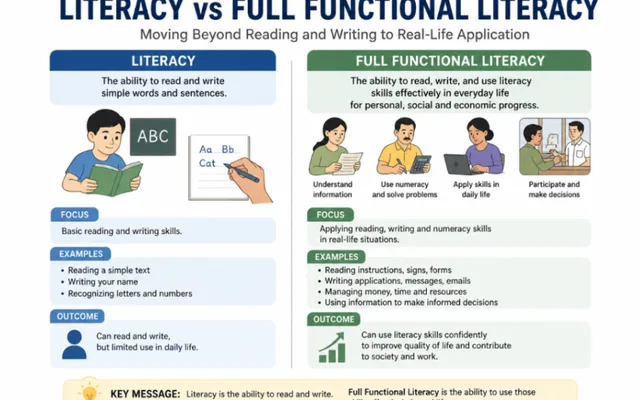
Mizoram Full Functional Literacy
Why in news: Mizoram declared a fully literate state, becoming the first state in India to achieve full functional literacy. Mizoram recorded 98.20% literacy rate as per the PLFS Survey 2023-24 (above 95% benchmark). In 2024, Ladakh became the first administrative unit to…
Decode Civils · 3 May 2026
 03
May 2026
03
May 2026
Current Affairs · Governance
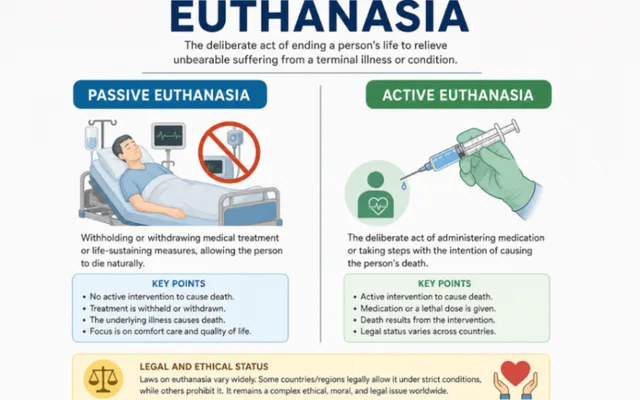
Euthanasia
Why in news: U.K. introduced the Terminally Ill Adults (End of Life) Bill, also known as the Assisted Dying Bill. Allows terminally ill adults in England and Wales with less than six months to live to choose assisted death under strict safeguards. It would require validation by…
Decode Civils · 3 May 2026
Our programmes
Courses for your attempt

PSIR EXCELLENCE PROGRAM PRO (OFFLINE): Batch-2
An Enrichment Course that can help you add 50+ marks in your PSIR Scores.

PSIR EXCELLENCE PROGRAM PRO (ONLINE): Batch-2
An Enrichment Course that can help you add 50+ marks in your PSIR Scores.

PSIR EXCELLENCE PROGRAM- BASE (OFFLINE): Batch-2
An Enrichment Course that can help you add 50+ marks in your PSIR Scores.

PSIR EXCELLENCE PROGRAM BASE (ONLINE): Batch-2
An Enrichment Course that can help you add 50+ marks in your PSIR Scores.

Mains Excellence Program Pro for Mains 2027 - Final Batch
Your One-Stop Solution for UPSC 2027 Mains: - MEP Faculties have an experience of 22 UPSC CSE Mains, 10 Interviews and 5 Final Selections. - Faculties include Mudit Jain Sir (AIR-222, 207, 173), Sourabh Arbole Sir (6…
Batch 2027 Starts 14 Sep 2026

Mains Excellence Program Plus for Mains 2027 - Final Batch
Your One-Stop Solution for UPSC 2027 Mains: - MEP Faculties have an experience of 22 UPSC CSE Mains, 10 Interviews and 5 Final Selections. - Faculties include Mudit Jain Sir (AIR-222, 207, 173), Sourabh Arbole Sir (6…
Batch 2027 Starts 14 Sep 2026

Mains Excellence Program Basic for Mains 2027 - Final Batch
Your One-Stop Solution for UPSC 2027 Mains: - MEP Faculties have an experience of 22 UPSC CSE Mains, 10 Interviews and 5 Final Selections. - Faculties include Mudit Jain Sir (AIR-222, 207, 173), Sourabh Arbole Sir (6…
Batch 2027 Starts 14 Sep 2026
Foundation + Advanced Ethics Base (Offline)
Is Ethics Paper Doable via Philosophical Gyan or Specific Thematic Preparation is Needed? Last 5 Years' Analysis & 54 Distinct Themes asked by UPSC answer the above question. Thematic preparation and advanced ethics…
Batch 2027 Starts 14 Sep 2026
Foundation + Advanced Ethics Base (Online)
Is Ethics Paper Doable via Philosophical Gyan or Specific Thematic Preparation is Needed? Last 5 Years' Analysis & 54 Distinct Themes asked by UPSC answer the above question. Thematic preparation and advanced ethics…
Batch 2027 Starts 14 Sep 2026
Foundation + Advanced Ethics Plus (Offline)
Is Ethics Paper Doable via Philosophical Gyan or Specific Thematic Preparation is Needed? Last 5 Years' Analysis & 54 Distinct Themes asked by UPSC answer the above question. Thematic preparation and advanced ethics…
Batch 2027 Starts 14 Sep 2026
Foundation + Advanced Ethics Plus (Online)
Is Ethics Paper Doable via Philosophical Gyan or Specific Thematic Preparation is Needed? Last 5 Years' Analysis & 54 Distinct Themes asked by UPSC answer the above question. Thematic preparation and advanced ethics…
Batch 2027 Starts 14 Sep 2026

Year Long Current Affairs Base (Pre + Mains)
Master Current Affairs the way UPSC demands—through conceptual understanding, issue-based analysis, and exam-oriented preparation. With a proven track record across UPSC and State PSC examinations, our course helps you…
Batch 2027 Starts 16 Aug 2026


0 comments
Discussion
No comments yet. Be the first.