
Aditi Varshney (AIR-57 CSE-22) Comprehensive Strategy
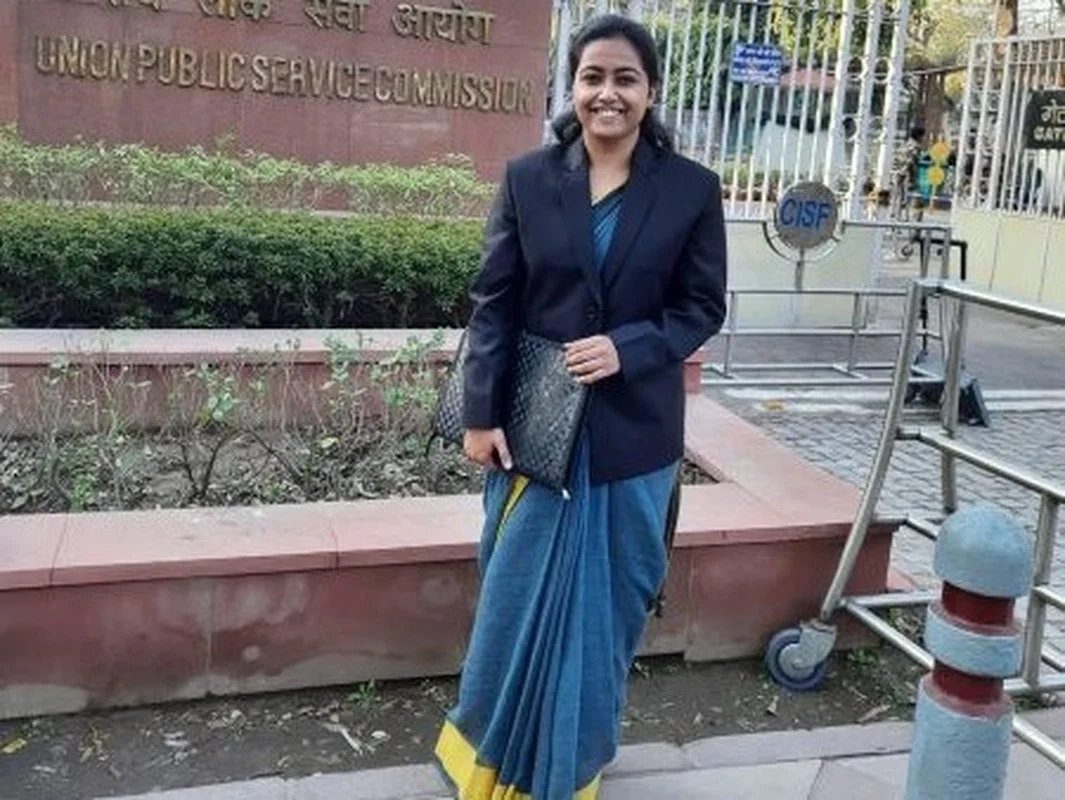
Hi All, Aditi Varshney secured AIR-57 in CSE-22 in her 1st attempt. Following is her write up where she has summarized her experience and learnings, dos and don'ts. Introduction Hello everyone! I am Aditi Varshney. I…

Hi All,
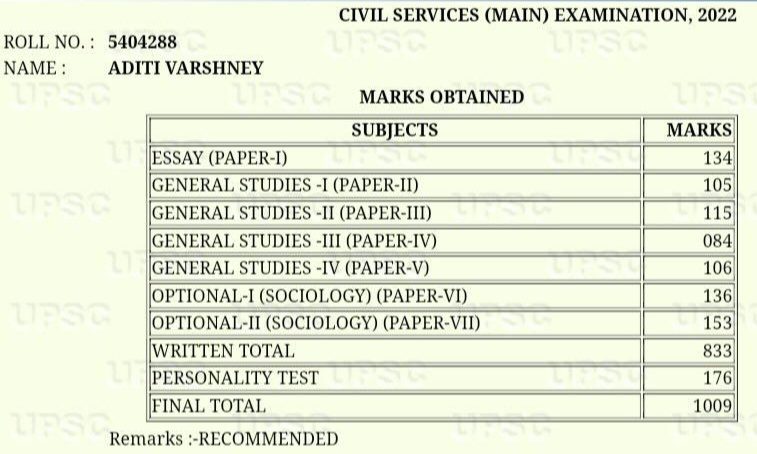
Aditi Varshney secured AIR-57 in CSE-22 in her 1st attempt. Following is her write up where she has summarized her experience and learnings, dos and don'ts.
Introduction
Hello everyone!
I am Aditi Varshney. I have secured AIR 57 in CSE 2022 and this was my 1st attempt at it.
I had PCM with computers in class 11-12th, but I did my graduation in B.A (hons.) Sociology from Delhi University. I took Sociology as my optional as well. After my final year exams, I took a drop year and prepared for civil services from my hometown Bareilly with the online resources.
General Advice to all the Beginners
1. Before you enter the preparation phase, make sure you have familiarised yourself with the different stages of this exam and the syllabus.
2. Cover your basics with NCERTs (it depends on you if you have to cover from class 9th or if you are from humanities background, just revise class 11th and 12th NCERTs)
3. Get a hang of newspaper reading (either The Hindu or Indian Express). In the beginning, it may take more than 2 hours also, and you may not understand many articles. But keep going, don’t be deterred by it. Eventually it will make sense.
4. Try to cover your syllabus first before you worry about giving tests or going through pyqs.
5. Once you are done with the syllabus, keep revising it and look at the pyqs. Simultaneously, give as many mock tests as you can (you can either join a test series or download the tests and do it at your pace in the beginning).
6. Assess the pyqs (it's very important) and you will be able to understand the key focus areas and the demand of this exam. At the same time, self analysis is equally important. Try to analyse your weak and strong points. Capitalise on your strengths and work on your weak areas.
7. Remember that you can’t ‘know it all’, so just focus on what are the important topics for the exam and only what is required. Don’t try to do a Phd in every subject. You will end up losing a lot of time.
How to Cover Topics
Coming to the books and sources referred by me. I did all the standard sources which every aspirant is aware of. Like laxmikant, spectrum etc.
Irrespective of any subject, the thumb rule is that one source for one topic (read the syllabus thoroughly for the topics) is sufficient.
Apart from that, develop a habit of internet surfing for the topics you do not understand or the topics which are generally in news. You will find new information which you can add to your existing notes. This would ensure conceptual clarity/ depth of knowledge on that topic and enrich your notes for both prelims and mains.
For both prelims and mains strategy, I followed 2 basic rules
1. Revising multiple times- no one can retain information in 2 or 3 readings of any topic. Multiple revisions are required. It may be monotonous and tiring but it is required. To revise effectively, I have 2 pieces of advice: one, make short notes by yourself such that you are only writing key information on that topic and not the entire story. Two, revise the subjects simultaneously. Like you can take 2-3 subjects on one day, then do another 2 subjects the next day and so on. (This would ensure that you are covering everything simultaneously without forgetting anything. Plus, you will be able to switch between subjects in the final exam very easily)
2. Practising tests- this would help you in realising your weak points, give you an idea about important areas to focus upon and will keep you on your toes with revision. Try to analyse your mistakes and go back, improve it, give another test. If the scores are not good, don’t get overwhelmed. Focus on mistakes! And the best guide would be your pyqs in this journey. Also, try to give your tests in the exam day timings and conditions. This would help in managing the pressure on the D-day!
If you want to read more upon my each subject strategy (including optionals- sociology) you can follow this link.
Few Do’s and Don’ts
Do’s:
1. Make short notes. You can’t revise books before your exam!
2. Take proper breaks, our mind has a limited capacity to handle, give it enough time to process the information without feeling guilty. 7-8 hours of consistent preparation everyday is enough.
3. Try to cover easy topics (according to you) first. This would give you a good momentum to begin with and would give you confidence for the difficult topics. Begin your day on the same trajectory.
4. For topics that are extremely difficult for you, try to see their weightage in the exam. If the amount of time you are investing is not proportionate to the weightage, you may skip it or just do the basics.
5. Try to do cost benefit analysis with every topic you study. Study only what and how much is important. Selective reading is very important.
Do not:
1. Do not Isolate yourself. This exam will test your mental strength. The anxiety, stress and self doubts could be unbearable sometimes. You will need a close circle of people to support you.
2. Do not count the number of hours you are studying, rather go by the daily/weekly targets and keep them flexible. This would make your preparation more effective.
3. Don’t start answer writing from day 1. The best time to begin with it is after you have covered your syllabus and revised it at least 2-3 times.
4. Do not cover more than 1 or at most 2 sources for any subject/topic. You will waste a lot of time re-reading the same stuff. FOMO is natural, but remember that what you’ve covered at one place is more than enough. You are not expected to know everything.
5. Do not randomly scroll youtube for upsc related stuff. It induces a lot of anxiety and will give you self doubts (apart from wasting your time). Every topper would have a different journey and therefore their strategy would suit them uniquely. Remember that you are unique. Both your journey and your abilities. So craft your own way without doubting yourself too much after every video you see.
6. Don’t get too affected by the results of mock tests. Final exam would be much different. If you can, try to take mock tests of different institutes, this would give you variety of experiences (you will get them for free on telegram/different websites)
At the end I would just say that try to understand the requirements of this exam. You can make sense of it by analysing the pyqs. They’ll serve you as the best guide during this preparation. And remember that even if the pattern changes, it changes for everyone. It is a competitive exam after all. If it’s difficult for you, it’s going to be the same for everyone. Just do the basics right and things will fall in place.
Preparing for UPSC?
Talk to us about the right programme for your attempt.
Keep reading
Related articles
 28
May 2026
28
May 2026
Topper Strategies · Comprehensive Strategy
Arvind Hanglem (AIR-83 CSE-22) Comprehensive Strategy
Arvind Hanglem secured AIR-83 in CSE-22 in his 4th attempt. Following is his detailed write up. Hello everyone ! I am Arvind Hanglem and I have secured AIR 83 in UPSC CSE 2022 in my 4th attempt (Ist Mains & Ist Interview). I come from the small town of Imphal West, Manipur.…
Decode Civils · 28 May 2026
 28
May 2026
28
May 2026
Topper Strategies · Comprehensive Strategy
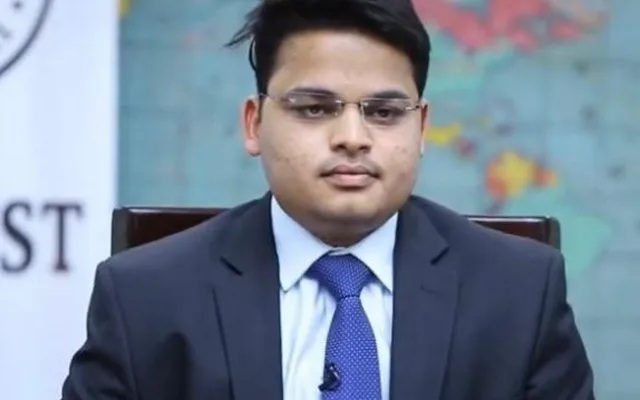
Navita Kumari (AIR-251 CSE-22) Working Professional + GS2 + Sociology + Comprehensive Strategy
Hi All, Navita Kumari has had 10 years of work experience before clearing CSE-22 with AIR-251. And, this she did in her 5th attempt even as she was unable to clear Prelims in her first 4 attempts. Following is her detailed strategy and learnings on Prelims, Mains &…
Decode Civils · 28 May 2026
 28
May 2026
28
May 2026
Topper Strategies · Comprehensive Strategy
Mridul Shivhare (AIR-247 CSE-21) PSIR + Comprehensive Strategy
Hi All, At a young age of 22, Mridul Shivhare cleared UPSC CSE-21 with AIR-247 in his very 1st attempt. Following is his strategy in his own words: Hello friends, I am Mridul Shivhare. I secured AIR 247 in UPSC CSE-2021. I am very fortunate to clear this exam in my 1st attempt…
Decode Civils · 28 May 2026
Our programmes
Courses for your attempt

PSIR EXCELLENCE PROGRAM PRO (OFFLINE): Batch-2
An Enrichment Course that can help you add 50+ marks in your PSIR Scores.

PSIR EXCELLENCE PROGRAM PRO (ONLINE): Batch-2
An Enrichment Course that can help you add 50+ marks in your PSIR Scores.

PSIR EXCELLENCE PROGRAM- BASE (OFFLINE): Batch-2
An Enrichment Course that can help you add 50+ marks in your PSIR Scores.
PSIR EXCELLENCE PROGRAM BASE (ONLINE): Batch-2
An Enrichment Course that can help you add 50+ marks in your PSIR Scores.

Mains Excellence Program Pro for Mains 2027 - Final Batch
Your One-Stop Solution for UPSC 2027 Mains: - MEP Faculties have an experience of 22 UPSC CSE Mains, 10 Interviews and 5 Final Selections. - Faculties include Mudit Jain Sir (AIR-222, 207, 173), Sourabh Arbole Sir (6…
Batch 2027 Starts 14 Sep 2026

Mains Excellence Program Plus for Mains 2027 - Final Batch
Your One-Stop Solution for UPSC 2027 Mains: - MEP Faculties have an experience of 22 UPSC CSE Mains, 10 Interviews and 5 Final Selections. - Faculties include Mudit Jain Sir (AIR-222, 207, 173), Sourabh Arbole Sir (6…
Batch 2027 Starts 14 Sep 2026

Mains Excellence Program Basic for Mains 2027 - Final Batch
Your One-Stop Solution for UPSC 2027 Mains: - MEP Faculties have an experience of 22 UPSC CSE Mains, 10 Interviews and 5 Final Selections. - Faculties include Mudit Jain Sir (AIR-222, 207, 173), Sourabh Arbole Sir (6…
Batch 2027 Starts 14 Sep 2026
Foundation + Advanced Ethics Base (Offline)
Is Ethics Paper Doable via Philosophical Gyan or Specific Thematic Preparation is Needed? Last 5 Years' Analysis & 54 Distinct Themes asked by UPSC answer the above question. Thematic preparation and advanced ethics…
Batch 2027 Starts 14 Sep 2026
Foundation + Advanced Ethics Base (Online)
Is Ethics Paper Doable via Philosophical Gyan or Specific Thematic Preparation is Needed? Last 5 Years' Analysis & 54 Distinct Themes asked by UPSC answer the above question. Thematic preparation and advanced ethics…
Batch 2027 Starts 14 Sep 2026
Foundation + Advanced Ethics Plus (Offline)
Is Ethics Paper Doable via Philosophical Gyan or Specific Thematic Preparation is Needed? Last 5 Years' Analysis & 54 Distinct Themes asked by UPSC answer the above question. Thematic preparation and advanced ethics…
Batch 2027 Starts 14 Sep 2026
Foundation + Advanced Ethics Plus (Online)
Is Ethics Paper Doable via Philosophical Gyan or Specific Thematic Preparation is Needed? Last 5 Years' Analysis & 54 Distinct Themes asked by UPSC answer the above question. Thematic preparation and advanced ethics…
Batch 2027 Starts 14 Sep 2026

Year Long Current Affairs Base (Pre + Mains)
Master Current Affairs the way UPSC demands—through conceptual understanding, issue-based analysis, and exam-oriented preparation. With a proven track record across UPSC and State PSC examinations, our course helps you…
Batch 2027 Starts 16 Aug 2026


0 comments
Discussion
No comments yet. Be the first.