
My Mains Strategy
I wrote 4 Mains and qualified all 4 with decent margin over cut-off. In my 1st Mains, I scored more in GS than the then AIR-1. In my 2nd Mains, my Rank in Mains was All India 11th! Interview score of 110 (2nd lowest among selected candidates brought down my final rank to 222. In…

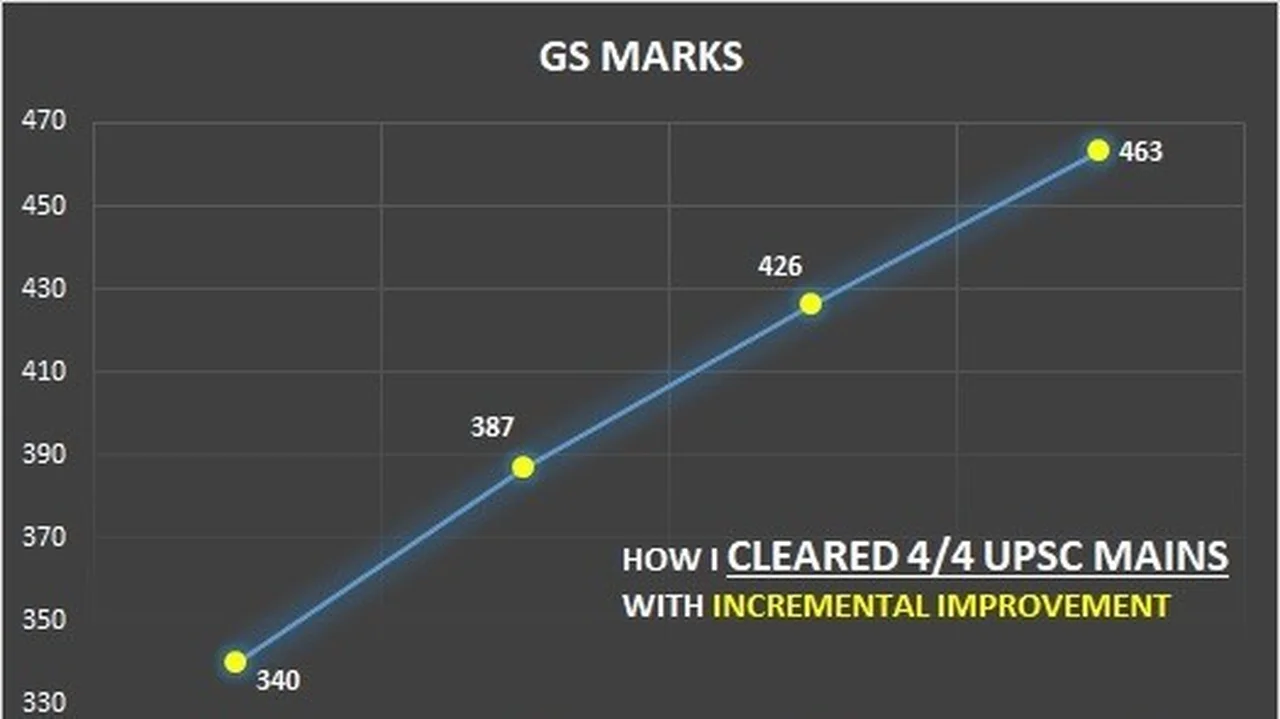
I wrote 4 Mains and qualified all 4 with decent margin over cut-off.
In my 1st Mains, I scored more in GS than the then AIR-1.
In my 2nd Mains, my Rank in Mains was All India 11th! Interview score of 110 (2nd lowest among selected candidates brought down my final rank to 222.
In my 3rd, my GS score was in Top 5 All India. 192 in Geography brought down eventual rank to 207.
In my 4th Mains, I scored 463 in GS.

So, one thing that I can proudly claim is that My Mains Strategy will definitely get you a place in Interview Round!!
My Mains strategy revolved around
- Concise material (static + current).
- Notes making from The Hindu newspaper.
- Multiple revisions of entire course content (4–5–6 revisions).
- Guessing what UPSC could ask from a particular news and training my mind accordingly.
- Optimizing time between Prelims and Mains.
- And lastly, Answer writing in tests.
Many focus and worry about answer writing. But fact is that if one knows what to write then only one can write. If one knows what to write, one can easily handle answer structure / strategy. In such a scenario daily answer practice is not needed because you know the 10–15 points that you will write! Details follow:
How To Make Notes
I have mentioned before that I used to write 10 points and 15 points for 10 & 15 markers respectively. From where these points will come? Of course from well made pointed notes that are revised about 5–6 times. Hence I gave due importance to notes:
- Made current notes from The Hindu + monthly magazine.
- Made notes on MS Word.
- E-notes help in easy mutations-editing-additions-sorting.
- As you revise your e-notes, edit them& make them as concise as possible.
Process:
- Divide content paper wise and topic wise. Example make separate doc for GS-2 IR, GS-2 Policies, GS-3 Science, GS-3 Security etc.
- For newspaper, you can use hardcopy or online edition. In my last attempt, I read The Hindu online and directly copy-pasted important lines. It saved time.
- Monthly magazine have a time lag of 15 days. So there is no option but to wait.
- Meanwhile, revise your newspaper notes once. This will give you good idea of what news you have in notes.
- From magazines, add to your newspaper notes only what’s missing.
Mains REVISION Strategy
- Revise notes at least 4-5 times during the course of preparation. I used to revise all my MAINS notes 5 to 6 times.
- Revise according to test series plan or create your own plan in line with a test series if you are doing self-study.
- It is MANDATORY to write 1 test per week.
- Make sure that you give each and every test after proper revision only.
- As optional revision is also needed (3-4 times), concise notes shall be kept ready in advance. Then only revision of whole optional is possible in 1 rest day provided before optional exam.
- Keep reviewing your timetable.
- For last 15 days before MAINS, newspapers can be skipped and entire course shall be revised.
- Revise relatively easy subject first.
- Keep GS-1 last and revise society notes for essay paper.
- Ethics shall be prepared so well that you don’t need to study it at all in last 15 days.
Guess Questions in Advance
- Prioritize issues with multiple revisions.
- Once notes of particular issue like GST, Privacy, Energy security, Cyber etc cross 2–3 pages, it becomes important.
- At times there are questions from one-off news.
- Keep important dates/events in check. Example, WIA 100 years of formation led to women rights question in 2017.
- Check syllabus. Questions in GS-3 are asked from syllabus topics like terrorism, insurgency, cyber, food processing etc.
Optimize days between Prelims and Mains
About 3 months is what one gets between Prelims and Mains. With experience of 4 Mains, I can say with full confidence that these 90 days end quite quickly!
IMPORTANT FACTORS TO KEEP IN MIND: Rest, Timetable, Newspaper backlogs, Notes making, Balancing Current & Static GS, Balancing optional & GS, Multiple revisions, Answer writing practice / Tests and Regularly updating oneself with latest trend
DETAILS:
- First thing that comes is a couple of days REST. Key here is to not prolong this rest beyond 3-4 days. Even here, one should be planning for next stage.
- Formulate TIMETABLE. If you are joining a test series, which is much recommended, then follow its timetable. Otherwise, make your own. Without a timetable, the preparation becomes directionless.
- Normally, these tests begin after 10-15 days of Prelims. So plan ASAP.
- Do not panic because of NEWSPAPER BACKLOG. One can read even 6-7 newspapers in a day and clear 1 month’s backlog in 4-5 days. Thereafter read newspaper on daily basis and MAKE NOTES either daily or weekly. Do not let backlog develop again.
- Newspaper / Current make for GS-2 and GS-3. Let the content grow! Writing GS-2 & 3 tests in first month with not enough current build up makes no sense. This is BALANCING CURRENT & STATIC GS.
- Hence, in 1st month or so, prepare static GS including Essay, GS-1 and GS-4. Prepare Optional along with static GS. Write tests for Essay, GS-1 and GS-4.
- Meanwhile, enough content will build up for GS-2 and GS-3. Prepare these and optional. Write tests. THIS BALANCES OPTIONAL, CURRENT AND STATIC GS.
- Generally, following a test series religiously would help you in revising a content 2-3 times if you prepare for and write all the tests.
- But 2-3 revisions are not enough. One needs 4-5-6 revisions. Accordingly, one has to make space for MULTIPLE REVISIONS in timetable. 5-6 revisions help in easily recalling 10-15 points in exam.
- Also, ANSWER WRITING PRACTICE is needed apart from tests. Here focus must be on answer structure rather than clock!
- Lastly, a mistake many (especially ‘veterans’) commit is not UPDATING ONESELF with trends in ‘market’. New optional notes or a trending new book can come handy!
Answer Writing Strategy
Assuming that you have worked on basics of answer writing which include:
- Basic answer structure (intro, points, conclusion).
- Writing 5 points per answer.
Improving and building on these basics involve:
- Expand the answer structure to (introduction, news background, points, paper specific keywords, diagrams and conclusion).
- Write at least 10 points.
- Utilize every inch of space provided in answer sheet.
How this helps?
- Revisiting study material and making notes will help you cover every single term mentioned in the syllabus. You will build your own luck.
- Multiple revisions will help you in quickly recalling 10–15 points. This increases your speed.
- News background adds depth to answer.
- Number of points increase dimensions and ‘moral pressure’ on examiner to award you more marks.
- Paper specific keywords show command over subject.
- Diagrams add the x-factor and edge over others.
Trust me, if you write 10–15 points in every answer and attempt every question then you will get 420+ in GS.
ATB!!!
Preparing for UPSC?
Talk to us about the right programme for your attempt.
Keep reading
Related articles
 24
May 2026
24
May 2026
Mains · Answer Writing Strategies
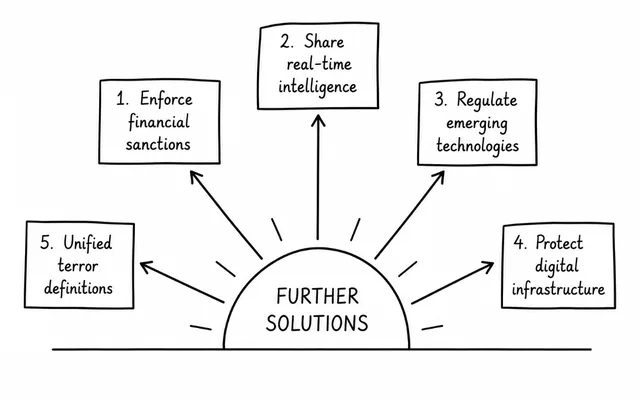
Diagrams for CSE Mains
Hi all, It is well established fact that answer writing in Mains is all about being unique and innovative. Presentation matters more than we think. Reasons to draw diagrams Break monotony of answers. Uniqueness. Despite knowing that diagrams are needed, not many draw them. To…
Decode Civils · 24 May 2026
 24
May 2026
24
May 2026
Mains · Essay
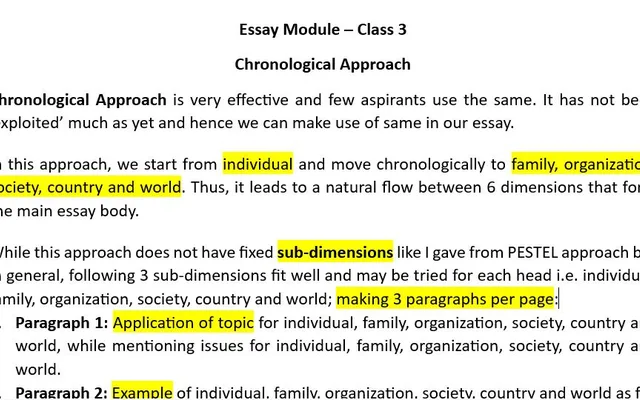
My Essay Writing Strategy
UPSC mains syllabus does not have any prescribed syllabus for the essay paper as such. As per the UPSC, “Candidates are expected to keep closely to the subject of the essay to arrange their ideas in an orderly fashion, and to write concisely. Credit will be given for effective…
Decode Civils · 24 May 2026
 24
May 2026
24
May 2026
Mains · Essay
How to deal with Philosophical Essays?
Though I have already written in bits and pieces regarding same, I am writing a dedicated post on how to deal with philosophical essay topics in UPSC and other competitive exams. Examples of Philosophical essays asked by UPSC in recent past: A good life is one inspired by love…
Decode Civils · 24 May 2026
Our programmes
Courses for your attempt

PSIR EXCELLENCE PROGRAM PRO (OFFLINE): Batch-2
An Enrichment Course that can help you add 50+ marks in your PSIR Scores.

PSIR EXCELLENCE PROGRAM PRO (ONLINE): Batch-2
An Enrichment Course that can help you add 50+ marks in your PSIR Scores.

PSIR EXCELLENCE PROGRAM- BASE (OFFLINE): Batch-2
An Enrichment Course that can help you add 50+ marks in your PSIR Scores.
PSIR EXCELLENCE PROGRAM BASE (ONLINE): Batch-2
An Enrichment Course that can help you add 50+ marks in your PSIR Scores.

Mains Excellence Program Pro for Mains 2027 - Final Batch
Your One-Stop Solution for UPSC 2027 Mains: - MEP Faculties have an experience of 22 UPSC CSE Mains, 10 Interviews and 5 Final Selections. - Faculties include Mudit Jain Sir (AIR-222, 207, 173), Sourabh Arbole Sir (6…
Batch 2027 Starts 14 Sep 2026

Mains Excellence Program Plus for Mains 2027 - Final Batch
Your One-Stop Solution for UPSC 2027 Mains: - MEP Faculties have an experience of 22 UPSC CSE Mains, 10 Interviews and 5 Final Selections. - Faculties include Mudit Jain Sir (AIR-222, 207, 173), Sourabh Arbole Sir (6…
Batch 2027 Starts 14 Sep 2026

Mains Excellence Program Basic for Mains 2027 - Final Batch
Your One-Stop Solution for UPSC 2027 Mains: - MEP Faculties have an experience of 22 UPSC CSE Mains, 10 Interviews and 5 Final Selections. - Faculties include Mudit Jain Sir (AIR-222, 207, 173), Sourabh Arbole Sir (6…
Batch 2027 Starts 14 Sep 2026
Foundation + Advanced Ethics Base (Offline)
Is Ethics Paper Doable via Philosophical Gyan or Specific Thematic Preparation is Needed? Last 5 Years' Analysis & 54 Distinct Themes asked by UPSC answer the above question. Thematic preparation and advanced ethics…
Batch 2027 Starts 14 Sep 2026
Foundation + Advanced Ethics Base (Online)
Is Ethics Paper Doable via Philosophical Gyan or Specific Thematic Preparation is Needed? Last 5 Years' Analysis & 54 Distinct Themes asked by UPSC answer the above question. Thematic preparation and advanced ethics…
Batch 2027 Starts 14 Sep 2026
Foundation + Advanced Ethics Plus (Offline)
Is Ethics Paper Doable via Philosophical Gyan or Specific Thematic Preparation is Needed? Last 5 Years' Analysis & 54 Distinct Themes asked by UPSC answer the above question. Thematic preparation and advanced ethics…
Batch 2027 Starts 14 Sep 2026
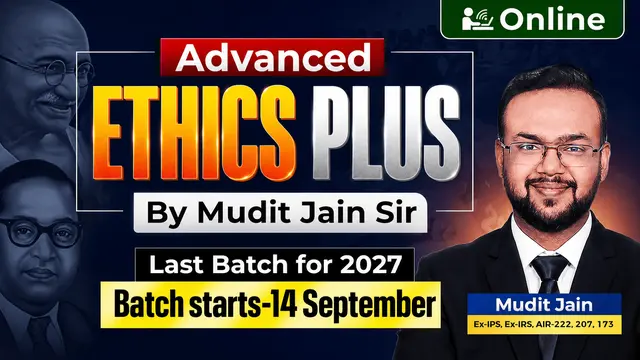
Foundation + Advanced Ethics Plus (Online)
Is Ethics Paper Doable via Philosophical Gyan or Specific Thematic Preparation is Needed? Last 5 Years' Analysis & 54 Distinct Themes asked by UPSC answer the above question. Thematic preparation and advanced ethics…
Batch 2027 Starts 14 Sep 2026

Year Long Current Affairs Base (Pre + Mains)
Master Current Affairs the way UPSC demands—through conceptual understanding, issue-based analysis, and exam-oriented preparation. With a proven track record across UPSC and State PSC examinations, our course helps you…
Batch 2027 Starts 16 Aug 2026


0 comments
Discussion
No comments yet. Be the first.