
Tejas Agnihotri (AIR-37 CSE-23) Prelims Strategy
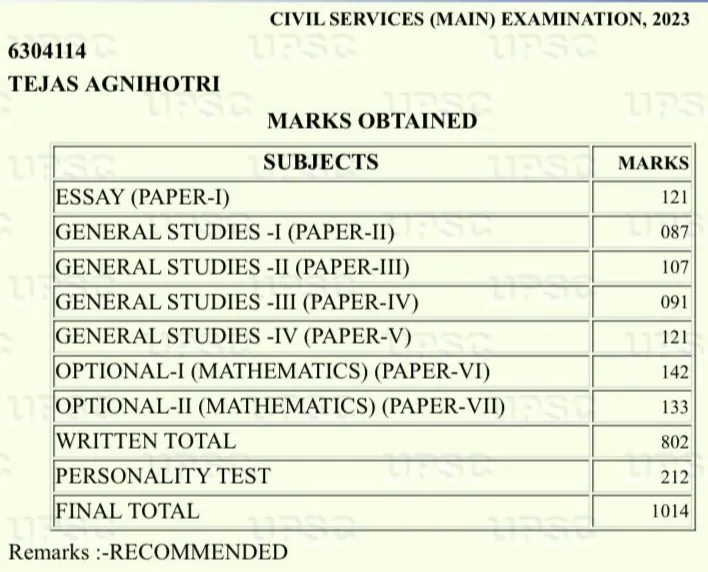
Hey everyone! My name is Tejas Agnihotri. I secured AIR-37 in CSE-23. My optional was Mathematics. It was my second attempt. In my first attempt I had secured AIR-266 in CSE-22 and AIR-54 in IFS. Through this blog, I’d like to put my thoughts out there in the hopes that it will…

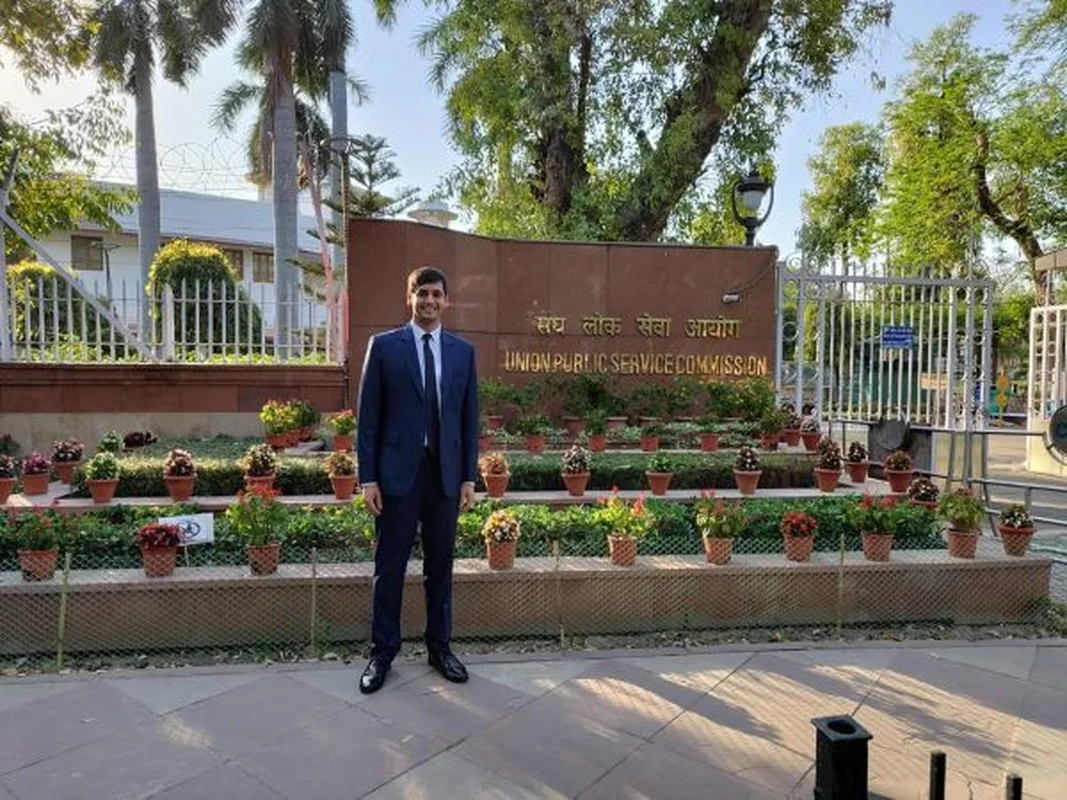
Hey everyone!
My name is Tejas Agnihotri. I secured AIR-37 in CSE-23. My optional was Mathematics. It was my second attempt. In my first attempt I had secured AIR-266 in CSE-22 and AIR-54 in IFS. Through this blog, I’d like to put my thoughts out there in the hopes that it will help someone navigate through this “labyrinth” of an exam in a better and efficient manner.
First and foremost, I’d like to take this opportunity to express my everlasting gratitude towards my sister and my parents. They have stood by me through times where I’ve doubted myself. Their unflinching belief in me, which seemed unjustifiable to me at some points, really pushed me to go the extra mile. The role of my sister in my journey cannot be overstated. She cleared CSE last year with AIR 124 and I got AIR 266. It was her last attempt. There is no denying the fact that her experience and wisdom guided me to prepare more sharply and in the right direction. Also, I cannot thank enough my friends and seniors who always stood by me, saw the best in me and wanted the best for me.
Before I begin, let me give a quick background brief about myself so people can understand where I am coming from and why my strategy was the way it was. I had done my schooling from various Kendriya Vidyalayas in Madhya Pradesh and New Delhi. I have done my graduation and post-graduation in Mathematics from Hindu College, University of Delhi. I finished my post-graduation in 2021 and took a drop to appear for the Prelims in 2022 (first attempt). To ensure the conciseness of the blog so that it stays relevant, I’ll elaborate more on my strategies in a small channel I have created on Telegram. If you’d so prefer, you can also contact me on my Instagram where I’ll try to answer whatever doubts you have.
Now, to begin, what did I do different this attempt? I had always believed in creating feedback loops that could provide you with information that you can use to better yourself. There were obvious omissions in my first attempt that I knew I had to plug in my second attempt. These were my inability to complete the syllabus of my optional and GS IV (Ethics). Though, a blunder had struck me during my first attempt, it was not something I could actively improve upon because it was not something I actively committed. During my first mains, a few of my GS1 answer sheet’s paper got stuck together while turning. This led to me turning 3 questions at once! It was only when I completed my paper 5 minutes before the bell rang that I realised I had left 3 full questions.
Well, the lesson here is that sometimes bad things happen. Now I could have either sulked post GS1 and ruined my GS2, or I could tackle each paper individually and not let my past papers dictate my performance in the coming ones. I scored 116 in GS2 in my first attempt (highest I scored in all the 4 GS papers that year). This could only happen because I could put aside the blunder I made in GS1 and not let it affect my mindset and performance in GS2. Now this can happen in prelims as well. Maybe in haste you mark a wrong bubble. It would hurt but then it would hurt you more later if you let it keep hurting you DURING the paper. As Marcus Aurelius had said –
“You have power over your mind, not outside events. Realise this and you will find strength”. You have to find that strength during your papers to stay sharp and nimble. I know it is easier said than done, but all we can do is try.
Since I had Mathematics as my optional which is infamous for being bulky, I had to “smartly” prioritise some subjects over the other. Let us begin with my Prelims strategy.
Current Affairs
-
- Newspaper The Hindu: I used to read The Hindu very diligently. It's fine if you're not mechanically regular with it. If you miss a few days, don't fret. It happens with everyone. Just get back on track ASAP
- The Indian Express: Explained Page
- The Internet: I used to extensively browse the internet for anything and everything. My goal was simple. I should understand whatever I am reading in the newspaper. If things were not crystal clear to me, I’d just google or find a video on YouTube and research till I understood it fully.
If you're a beginner and reading The Hindu (for eg) takes a lot of time, or if you can't figure out which articles are important or not, there are a couple of things you can do. You can browse YouTube for daily newspaper analysis (a lot of people post such videos, they are usually 30 minutes long. Watch these videos at 2x to save time). Now, you can either watch these videos first and then start reading the newspaper for a more focused approach (remember to trust your judgement, these videos might miss on some important articles that you should have read. So, if you feel an article is important, glance through it).
Or you can first read the newspaper and then watch these videos to figure out the articles that you missed on. But keep in mind, these videos are only training wheels. You should try to wean off them in a couple of months.
Booklist
I feel the booklist is very easily available online. If you would still want to know particularly what books I studied, I can post it on my telegram channel or you can hit me up on Instagram. I did not have the time to experiment dramatically when it came to the booklist. So I ensured I read the standard textbooks well so as to achieve a certain level where I can tackle questions that any other serious aspirant could.
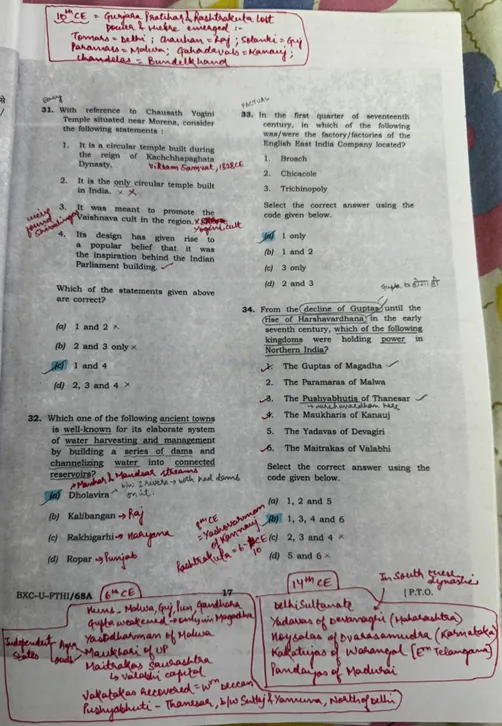
A sine qua non for Prelims (if there is any, in my opinion) is doing PYQs very earnestly.
This is how I Analysed the PYQs
- First and foremost, I approached the papers year wise and not theme wise. I used to get them printed and would solve them in an exam like simulation. By doing so, I killed two birds with one stone. I practiced PYQs and at the same time I practiced how to solve the MCQs.
- Then I used to sit down and understand my mistakes (feedback loops). Understand the topics I lacked knowledge in. Understand where my “intelligent guessing” went wrong and how I could have tweaked the way I thought during the exam to get it right the next time.
- Then began the most crucial part. I used to go through each question thoroughly and would gather information on all the options that UPSC had thrown at us. And while analysing ALL the options, I had created my own notes and hot topics from where UPSC had asked questions frequently.
- Post this exercise, you will not only have quality content but also the MOST relevant content with you. It is quite obvious that designing questions and that too hundreds of them is no joke. The examiners are bound to go back to the PYQs and recycle them in ingenious ways. By doing this exercise I mentioned above, you will arm yourself with knowledge that can tackle such questions.
Mapping Strategy
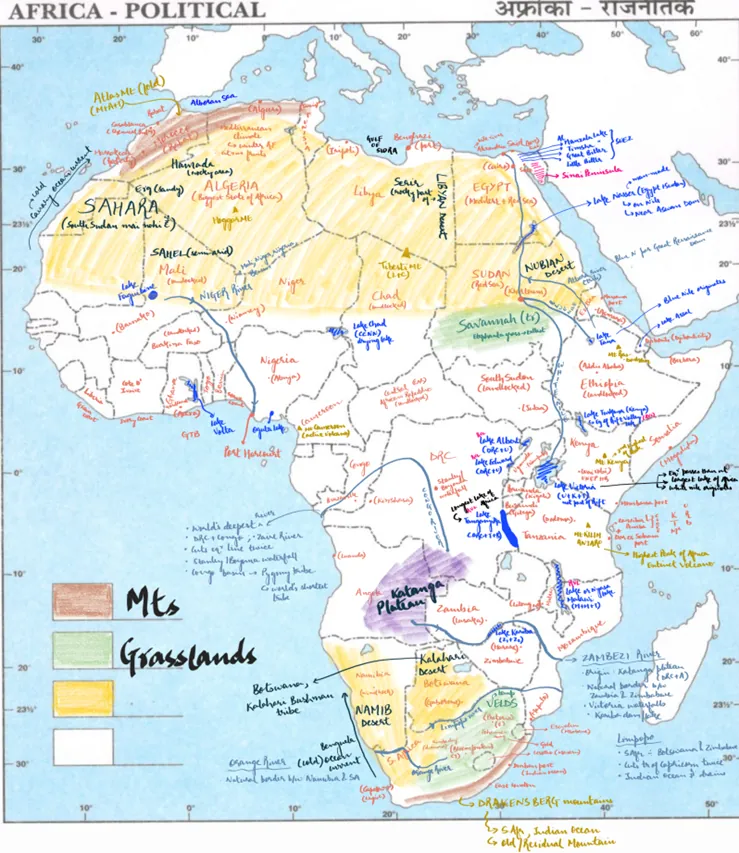
- I used to cover the world map continent wise. The trick is to cover the continents slowly. Take your time. Don't rush. Dedicate about an hour or two each day and fill in the details. Google images of the places you're adding on to your map. The visuals help you remember things better. Practice PYQs and add the places asked in the continents you're covering.
- Treat it as something that can break the monotony of static subjects you're reading. This is another trick you must employ to maximize your productivity. Strategically infuse activities in between long reading sessions to break the monotony. For eg, after a session of 2-3 hours of modern history, it becomes difficult to get back to modern history again after a break. Instead of having two modern history sessions back to back, break the monotony by introducing map work in between. More on how to boost productivity later.
- Please find below the continent of Africa that I've covered. Use it as a template and create your own maps. There is no shortcut to this.
- Similarly, one should aim to cover the important national parks, Ramsar sites, biodiversity parks etc.
- These are factual questions. And if you are able to get a grip on them, the questions in prelims would be pretty straightforward and doable. You can try to make the facts stick by googling their images (whatever helps). But again, there is no shortcut to this. To memorize facts, you have to repeatedly go through them.
How I Attempted the Paper?
I feel we are more drawn towards complicated methods because we feel that the tougher the exam is, the more sophisticated approach it requires. That’s not true. Find elegance and comfort in simplicity.
I simply started from the 1st question, gave it the time it deserved, marked the answer on the paper and moved on to the next question. Once I completed the paper (tried to finish it in 1:40 or 1:45 hours), I went back to the first question and started bubbling the OMR (gave second thought to some questions that really troubled me while bubbling). That’s it.
Some people go through multiple rounds where they first solve the questions they are sure of, they then solve questions in which they can eliminate 2 options in round two and so on. I felt this was too complicated a process for me. I did not want to spend my bandwidth categorising questions into these “buckets” (questions you’re sure of, questions where you can eliminate two options etc).
See, any method is fine. But always see which one fits your style. You should feel good and confident about yourself. That is the ultimate goal. So if you have the time, do experiment and try different approaches.
My purpose for sharing my method was to hopefully help someone feel confident that simple methods work. Simple methods are efficient and effective. Don’t let the “complications” of any exam challenge the power of simplicity. Remember that simplicity is the ultimate sophistication.
Also, I’m aware that what’s simple for me might be complicated for someone else. That’s why you need to practice and see what clicks for you.
CSAT
I didn't practice CSAT much (which I later realised that I should have). Given my mathematics background, I was comfortable with quant. But UPSC has certainly upped their game a notch.
I made sure to solve a few PYQs in a timed manner in my first attempt (I scored 100+ in those and hence shifted my focus to GS). In my second attempt I watched a couple of marathon sessions (14 or so hours long videos on YouTube). I feel they give a sense of completion and cover most of the topics. Along with that they'll pick up some PYQs and incorporate that into the lecture as well. You can write down the formulas they're using and understand the process simultaneously.
Since 2022, CSAT has become increasingly difficult. Apart from the 2022 and 2023 PYQs, the utility of PYQs has certainly diminished slightly because the quant that is now asked is not adequately reflected in the past papers. But that doesn't mean you shouldn't solve PYQs.
Your goal should be to cover the last 5 years' PYQs in an exam like simulation. Have a formula sheet ready and on the go to revise post the GS paper.
I've not attempted any test series for CSAT and hence won't be able to comment on the quality of questions they entail, but if you feel solving them would help you gain confidence and practice quant better, go for it. Don't overdo it though. There will always be a gap when it comes to the real UPSC papers and test series. And that is why PYQs will always be relevant. It's a window to the minds of the "real" question makers. And therefore, take the marks you get in these test series with a pinch of salt. Create strong feedback loops. Recognise and improve upon your weaknesses.
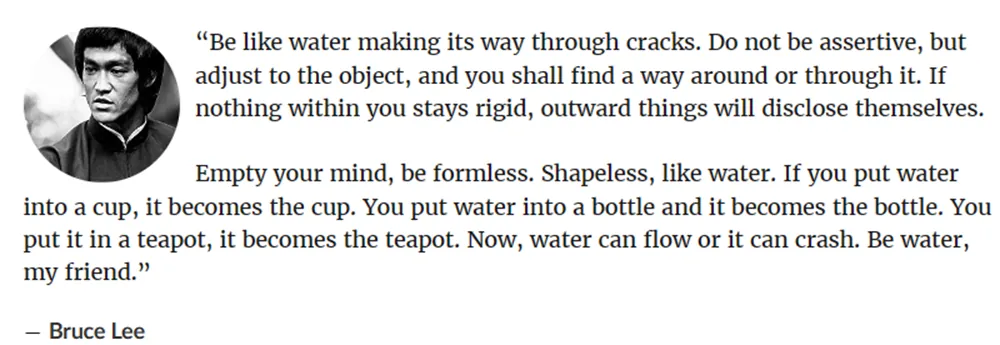
While you are attempting the paper, you should keep your wits about you and remain calm. If the paper is difficult, it will be so for everyone. Staying calm at that moment would give you an edge over someone who would lose their cool. That being said, the rest is very individualistic in nature. You need to have net 27 correct to sail through. If you're good at quant, start from quant. But don't get stuck at one question. CSAT is the game of finding easy questions sprinkled throughout the paper. If you can't solve a question, move on. If quant is tough, switch to comprehension. Be fluid and dynamic with your approach. Expect the unexpected in UPSC and be mentally ready to switch strategies according to the paper (despite quant being my strong suit, I prioritised passages last year and it was a decision I took during the paper, after going through it briefly).
Again, staying confident and trusting that whatever you've done is enough for you to clear the threshold is CRUCIAL. There is no dearth of materials available and it will never end. So stick to a few sources and have faith in yourself and your abilities!
Some tools that helped me stay calm and mitigate or adapt to stressful situations (I'll try to update this thread on my telegram and add more tools with time).
1. Physiological sigh - for destressing quickly
2. Yoga Nidra - usually a 30 min long session (you can find longer ones). Helps you sleep better. Or if you've had a bad night where you couldn't sleep much, you could wake up and do it first thing in the morning to get a boost. And if you're generally feeling a bit fatigued, a session of this would certainly pick you up a bit.
(There are various videos on YouTube, you can find any that you like and stick to it)]]
Fundamentals
Given the contemporary nature of Prelims, you have to ensure you get your fundamentals bang on. Topics like Polity, Economics, Geography and Environment for example are topics where you can be a bit certain to get the questions right. The more you put in efforts here, the more chances of you getting the questions right. Any serious aspirant would be getting the questions to these topics right. If you could not, it does not mean you are out of the race. The race just became a bit more difficult for you. These topics provide the certainty amongst the uncertainty of prelims. You can prepare them well to hedge your risks.
There is no right or wrong strategy when it comes to this exam. I had to completely leave medieval history in my first attempt because I simply could not find the time. I had to choose between investing my time in Mathematics or Medieval History and the choice was crystal clear to me. You have to inevitably make such choices for yourself. You have to take risks. Just try to ensure that they are calculated risks based on some rationale.
I have purposefully talked about prelims only because that is what is looming on our heads right now. Remember, Prelims is just one stage. If you manage to clear it, give yourself a pat on the back. But the real war starts now. Don’t get complacent. I recall a scene from Dark Knight Rises -
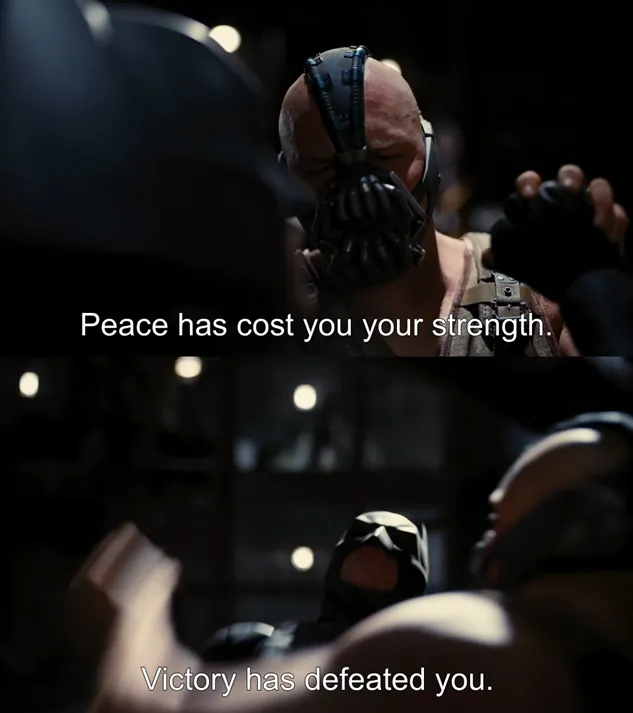
Make sure that your victory does not defeat you. If you would want, I would write another piece on Mains and Interview. I would eventually do that anyway on my telegram channel with time. Because this blog has already been quite long, I’ll end it with some general gyaan.
I feel this exam, more than anything else, demands a fundamental acceptance of the philosophy that beyond a certain point it is out of your control. It is designed in a way that years of hard work can sometimes be lost due to small blunders or even due to subjectivity or "luck" not being on your side. There's no real concept of proportionality with respect to hard work and results in this exam.
It seems unfair but because everyone is in the same boat, it makes it somewhat okay, if not fair.
That being said, this exam is tough. It takes a toll on you and on your social life (to an extent).
For me, what sometimes works is broadening my perspective. Everything is transient and this too shall pass. In the next 150 years, this planet will have a completely new set of people and none of them would know you directly. All your achievements and all your mistakes would be forgotten. The world would continue like nothing has changed. So relax and do not take 'life' very seriously. In the grander scheme of things, very few things matter and your happiness is definitely one of them.
Also, I fully acknowledge that it's easier said than done. I realise that luck has been on my side and I'm eternally grateful for that. But I still feel we should guard our mental peace with whatever weapons we can deploy. And your attitude is the strongest weapon of all.
Godspeed!
Preparing for UPSC?
Talk to us about the right programme for your attempt.
Keep reading
Related articles
 23
May 2026
23
May 2026
Topper Strategies · Prelims
Benjo P Jose (AIR-59 CSE-23) Prelims Strategy
Hello everyone, This is Benjo P Jose, AIR 59, UPSC CSE 2023. I am a native Kerala and have graduated in mathematics from St. Stephen’s College Delhi. About one year after graduating, I started preparing for CSE. This (2023 UPSC CSE) was my fourth attempt. After having failed two…
Decode Civils · 23 May 2026
 28
May 2026
28
May 2026
Topper Strategies · Optionals
Avinash (AIR-17 CSE-22) Philosophy 319 Marks
Hi All, This is the 6th Topper Journey & Strategy post from the Batch of 2023. Philosophy optional performance over the years has been a cause of concern for those who have opted this optional. The numbers are…
Decode Civils · 28 May 2026
 28
May 2026
28
May 2026
Topper Strategies · Optionals
My Geography Strategy - 4 Mains
There are optional subjects. Then there are Popular optional subjects. And then there is GEOGRAPHY! One of the most 'loved' subject WRT number of Aspirants opting for it and perhaps the most 'hated' subject because of…
Decode Civils · 28 May 2026
Our programmes
Courses for your attempt

PSIR EXCELLENCE PROGRAM PRO (OFFLINE): Batch-2
An Enrichment Course that can help you add 50+ marks in your PSIR Scores.

PSIR EXCELLENCE PROGRAM PRO (ONLINE): Batch-2
An Enrichment Course that can help you add 50+ marks in your PSIR Scores.

PSIR EXCELLENCE PROGRAM- BASE (OFFLINE): Batch-2
An Enrichment Course that can help you add 50+ marks in your PSIR Scores.
PSIR EXCELLENCE PROGRAM BASE (ONLINE): Batch-2
An Enrichment Course that can help you add 50+ marks in your PSIR Scores.

Mains Excellence Program Pro for Mains 2027 - Final Batch
Your One-Stop Solution for UPSC 2027 Mains: - MEP Faculties have an experience of 22 UPSC CSE Mains, 10 Interviews and 5 Final Selections. - Faculties include Mudit Jain Sir (AIR-222, 207, 173), Sourabh Arbole Sir (6…
Batch 2027 Starts 14 Sep 2026

Mains Excellence Program Plus for Mains 2027 - Final Batch
Your One-Stop Solution for UPSC 2027 Mains: - MEP Faculties have an experience of 22 UPSC CSE Mains, 10 Interviews and 5 Final Selections. - Faculties include Mudit Jain Sir (AIR-222, 207, 173), Sourabh Arbole Sir (6…
Batch 2027 Starts 14 Sep 2026

Mains Excellence Program Basic for Mains 2027 - Final Batch
Your One-Stop Solution for UPSC 2027 Mains: - MEP Faculties have an experience of 22 UPSC CSE Mains, 10 Interviews and 5 Final Selections. - Faculties include Mudit Jain Sir (AIR-222, 207, 173), Sourabh Arbole Sir (6…
Batch 2027 Starts 14 Sep 2026
Foundation + Advanced Ethics Base (Offline)
Is Ethics Paper Doable via Philosophical Gyan or Specific Thematic Preparation is Needed? Last 5 Years' Analysis & 54 Distinct Themes asked by UPSC answer the above question. Thematic preparation and advanced ethics…
Batch 2027 Starts 14 Sep 2026
Foundation + Advanced Ethics Base (Online)
Is Ethics Paper Doable via Philosophical Gyan or Specific Thematic Preparation is Needed? Last 5 Years' Analysis & 54 Distinct Themes asked by UPSC answer the above question. Thematic preparation and advanced ethics…
Batch 2027 Starts 14 Sep 2026
Foundation + Advanced Ethics Plus (Offline)
Is Ethics Paper Doable via Philosophical Gyan or Specific Thematic Preparation is Needed? Last 5 Years' Analysis & 54 Distinct Themes asked by UPSC answer the above question. Thematic preparation and advanced ethics…
Batch 2027 Starts 14 Sep 2026
Foundation + Advanced Ethics Plus (Online)
Is Ethics Paper Doable via Philosophical Gyan or Specific Thematic Preparation is Needed? Last 5 Years' Analysis & 54 Distinct Themes asked by UPSC answer the above question. Thematic preparation and advanced ethics…
Batch 2027 Starts 14 Sep 2026

Year Long Current Affairs Base (Pre + Mains)
Master Current Affairs the way UPSC demands—through conceptual understanding, issue-based analysis, and exam-oriented preparation. With a proven track record across UPSC and State PSC examinations, our course helps you…
Batch 2027 Starts 16 Aug 2026


0 comments
Discussion
No comments yet. Be the first.