
Birthright Citizenship
What: Birthright citizenship is a legal principle where a person automatically becomes a citizen of a country by being born within its territory. It is most commonly associated with the United States. Why in News: This topic is the center of a major legal and political battle in…

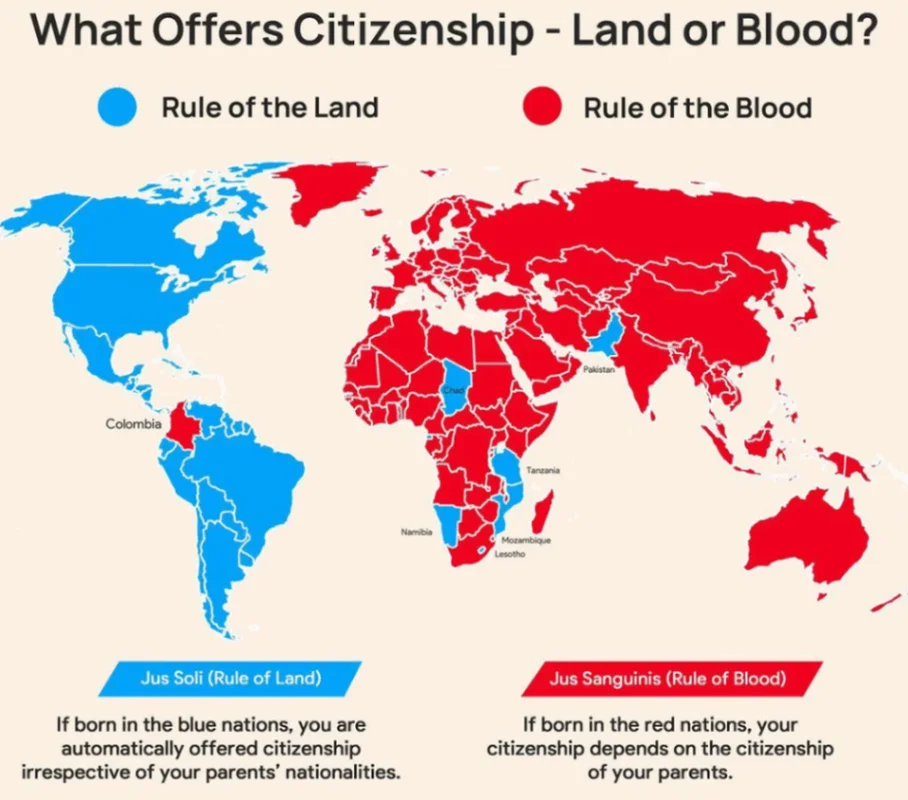
What: Birthright citizenship is a legal principle where a person automatically becomes a citizen of a country by being born within its territory. It is most commonly associated with the United States.
Why in News: This topic is the center of a major legal and political battle in the U.S. involving a Supreme Court case and controversial comments by President Trump.
Current Situation in the United States
- The 14th Amendment: For over 150 years, the 14th Amendment has been interpreted to guarantee citizenship to nearly everyone born on U.S. soil.
- Executive Order: Upon taking office for his second term in January 2025, President Trump signed an executive order to end automatic citizenship for children born to undocumented parents or those on temporary visas.
- Trump v. Barbara (Supreme Court Case): The Supreme Court heard oral arguments on April 1, 2026. The administration argues the 14th Amendment was intended for formerly enslaved people, not for "birth tourism" or illegal entry. A ruling is expected by late June or early July 2026.
- Recent Controversy: On April 23, 2026, President Trump reshared a video referring to countries like India and China as "hellholes" to argue that immigrants from these nations are exploiting the birthright system. The Indian Ministry of External Affairs described the comments as "uninformed".
Birthright Citizenship in India
- India's laws have become significantly more restrictive over the decades, moving away from pure birthright citizenship.
- 1950–1987: Automatic citizenship for anyone born in India.
- 1987–2004: Citizenship granted if at least one parent was an Indian citizen at the time of birth.
- Post-2004: A child born in India is a citizen only if both parents are Indian citizens, or if one parent is a citizen and the other is not an illegal migrant.
| Feature | United States | Canada/Mexico | UK/Europe |
| Type | Unconditional Jus Soli (under legal challenge) | Unconditional Jus Soli | Conditional (usually requires one resident/citizen parent) |
| Number of Countries | One of about 30 | Both offer automatic birthright citizenship | Most have moved to Jus Sanguinis (citizenship by blood) |
Preparing for UPSC?
Talk to us about the right programme for your attempt.
Keep reading
Related articles
 03
Jul 2026
03
Jul 2026
Current Affairs · Polity
Gram Sabhas and Panchayats
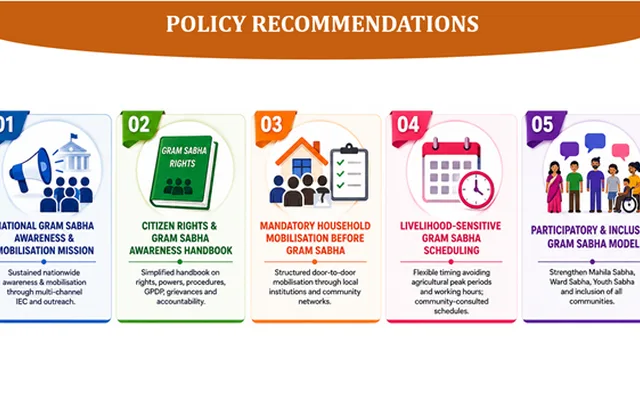
The Hindu, Page 6, Editorial - Yes and no - GS-2-Polity Why in News: A Rural Development Ministry report based on surveys examines citizen participation in gram sabhas and highlights concerns over participation fatigue.…
Decode Civils · 3 Jul 2026
 25
Apr 2026
25
Apr 2026
Current Affairs · Polity
Women Reservation
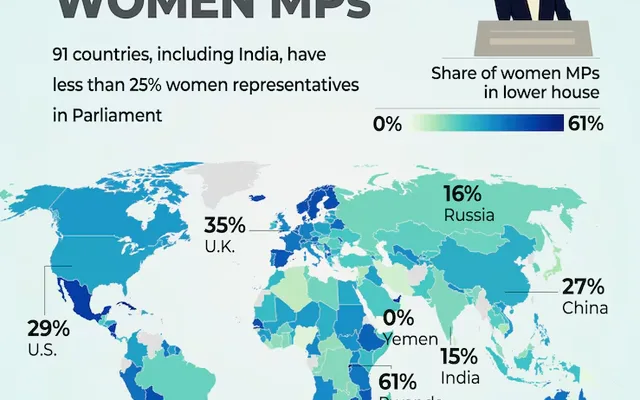
What: The Legal Framework The core of this reservation lies in the 106th Constitutional Amendment Act, 2023 (Nari Shakti Vandan Adhiniyam). The Mandate: It reserves 33% (one-third) of seats for women in the Lok Sabha, State Legislative Assemblies, and the Delhi Legislative…
Decode Civils · 25 Apr 2026
 25
Apr 2026
25
Apr 2026
Current Affairs · Polity
16th Finance Commission
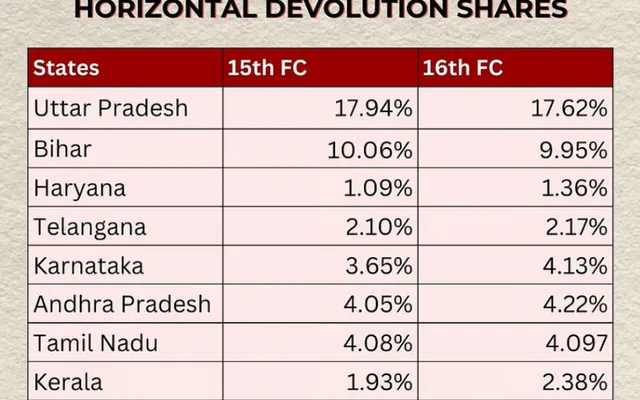
Why in news: 16th FC recommended that Centre retain 41% share of tax devolution to States as in force since 2021. ₹1.4 lakh crore States Grant include Rural and Urban Local Body and Disaster Management Grants. It tweaked formula that decides the division of the share among the…
Decode Civils · 25 Apr 2026
Our programmes
Courses for your attempt

PSIR EXCELLENCE PROGRAM PRO (OFFLINE): Batch-2
An Enrichment Course that can help you add 50+ marks in your PSIR Scores.

PSIR EXCELLENCE PROGRAM PRO (ONLINE): Batch-2
An Enrichment Course that can help you add 50+ marks in your PSIR Scores.

PSIR EXCELLENCE PROGRAM- BASE (OFFLINE): Batch-2
An Enrichment Course that can help you add 50+ marks in your PSIR Scores.
PSIR EXCELLENCE PROGRAM BASE (ONLINE): Batch-2
An Enrichment Course that can help you add 50+ marks in your PSIR Scores.

Mains Excellence Program Pro for Mains 2027 - Final Batch
Your One-Stop Solution for UPSC 2027 Mains: - MEP Faculties have an experience of 22 UPSC CSE Mains, 10 Interviews and 5 Final Selections. - Faculties include Mudit Jain Sir (AIR-222, 207, 173), Sourabh Arbole Sir (6…
Batch 2027 Starts 14 Sep 2026

Mains Excellence Program Plus for Mains 2027 - Final Batch
Your One-Stop Solution for UPSC 2027 Mains: - MEP Faculties have an experience of 22 UPSC CSE Mains, 10 Interviews and 5 Final Selections. - Faculties include Mudit Jain Sir (AIR-222, 207, 173), Sourabh Arbole Sir (6…
Batch 2027 Starts 14 Sep 2026

Mains Excellence Program Basic for Mains 2027 - Final Batch
Your One-Stop Solution for UPSC 2027 Mains: - MEP Faculties have an experience of 22 UPSC CSE Mains, 10 Interviews and 5 Final Selections. - Faculties include Mudit Jain Sir (AIR-222, 207, 173), Sourabh Arbole Sir (6…
Batch 2027 Starts 14 Sep 2026
Foundation + Advanced Ethics Base (Offline)
Is Ethics Paper Doable via Philosophical Gyan or Specific Thematic Preparation is Needed? Last 5 Years' Analysis & 54 Distinct Themes asked by UPSC answer the above question. Thematic preparation and advanced ethics…
Batch 2027 Starts 14 Sep 2026
Foundation + Advanced Ethics Base (Online)
Is Ethics Paper Doable via Philosophical Gyan or Specific Thematic Preparation is Needed? Last 5 Years' Analysis & 54 Distinct Themes asked by UPSC answer the above question. Thematic preparation and advanced ethics…
Batch 2027 Starts 14 Sep 2026
Foundation + Advanced Ethics Plus (Offline)
Is Ethics Paper Doable via Philosophical Gyan or Specific Thematic Preparation is Needed? Last 5 Years' Analysis & 54 Distinct Themes asked by UPSC answer the above question. Thematic preparation and advanced ethics…
Batch 2027 Starts 14 Sep 2026
Foundation + Advanced Ethics Plus (Online)
Is Ethics Paper Doable via Philosophical Gyan or Specific Thematic Preparation is Needed? Last 5 Years' Analysis & 54 Distinct Themes asked by UPSC answer the above question. Thematic preparation and advanced ethics…
Batch 2027 Starts 14 Sep 2026

Year Long Current Affairs Base (Pre + Mains)
Master Current Affairs the way UPSC demands—through conceptual understanding, issue-based analysis, and exam-oriented preparation. With a proven track record across UPSC and State PSC examinations, our course helps you…
Batch 2027 Starts 16 Aug 2026


0 comments
Discussion
No comments yet. Be the first.